- Geschreven op
- 4 min. leestijd

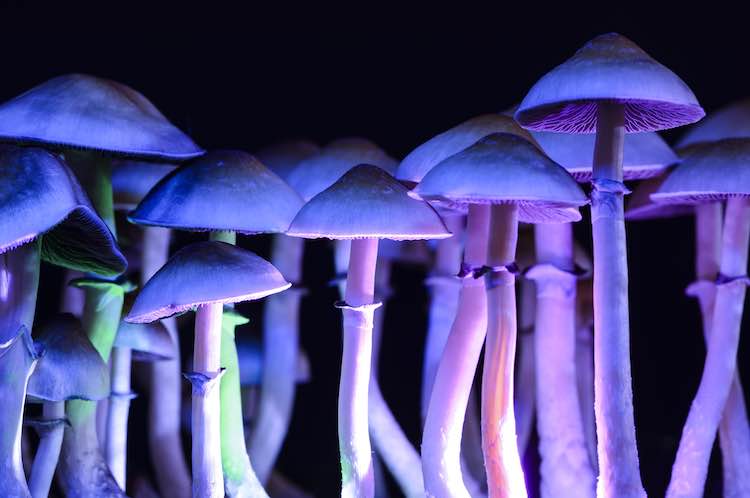
For decades, aging has been described as an inevitability: a slow unraveling of biological order, written into the fabric of every living cell. Yet every so often, a scientific result surfaces that seems to lean against that certainty, if only for a moment. In the summer of 2025, such a moment arrived from an unexpected place, a laboratory experiment involving psilocin, the primary active metabolite of the psychedelic compound psilocybin.
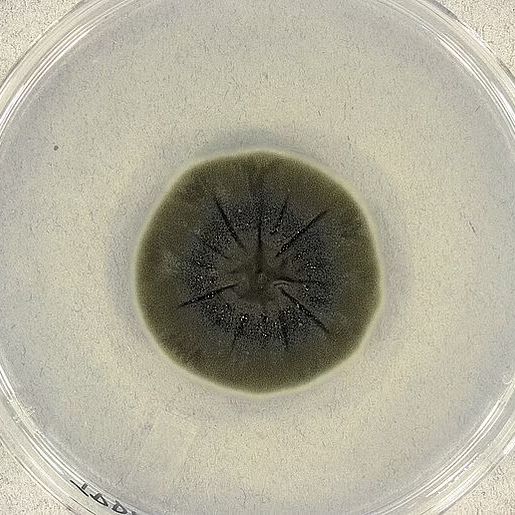
The discovery did not emerge from the usual hubs of anti-aging research, nor from teams working with high-profile molecules like rapamycin or NAD+ boosters. Instead, it came from a collaboration between researchers at Emory University and Baylor College of Medicine, who were initially studying psilocin for its neurological effects. What they found startled them: human lung and skin cells exposed to psilocin lived more than 50 percent longer than untreated cells. In aging mice, survival rates over ten months rose from 50 percent to 80 percent under similar exposure conditions. The compound best known for altering perception appeared to be altering time itself, or at least the pace at which cells experienced it.
The finding raised immediate questions. How could a psychedelic molecule, known mostly for its interaction with serotonin receptors in the brain, influence aging in tissues far removed from consciousness? And what might this mean for the broader landscape of longevity science?
The early hypotheses centered on mechanisms familiar to anyone who studies cellular decline. Aging cells accumulate oxidative stress, a tide of free radicals causing cumulative microscopic damage. They struggle to repair DNA breaks with the efficiency they once had. Their telomeres, the tiny caps at the ends of chromosomes, shorten with each division, gradually eroding the cell’s ability to reproduce. Some researchers suggested that psilocin’s effects might touch all of these pathways: reducing oxidative stress, bolstering DNA repair, and helping preserve telomere integrity.
These explanations, while plausible, remain speculative. The study was not designed to map every biochemical shift triggered by the molecule. But the longevity of the cells, their refusal to deteriorate on schedule, suggests that psilocin may interact with the machinery of aging more directly than previously imagined. It hints at a biochemical conversation between psychedelic compounds and the ancient processes that govern cellular survival.
What complicates the story is how dramatically different these findings are from the public image of psychedelics. They have long been framed as tools of introspection, catalysts for personal transformation, or agents that disrupt habitual patterns of thought. But aging is a cellular process, not a psychological one. If psilocin influences both, it invites a reframing of what psychedelic compounds might be capable of, and what domains of science they belong to.
Still, the road from isolated cell cultures and aging mice to human longevity is long, and often treacherous. Many compounds that lengthen rodent lifespan fail to produce similar results in people. Our biology is more complex, our environments more variable. Researchers involved in the psilocin experiment emphasized this gap. The results, they noted, “do not translate directly to human lifespan,” even as they illuminate pathways worth pursuing.
Yet the study landed at a cultural moment when longevity research is increasingly mainstream. Consumers are now conversant in biological age tests, senolytics, mitochondrial boosters, and the rhetoric of “extending healthspan.” Against this backdrop, the idea of a psychedelic compound influencing aging processes carries both scientific and cultural weight. It suggests that psychedelic research, long siloed in psychiatry and neuroscience, may spill into other fields. Perhaps the mind-altering story was only one chapter of a much longer narrative.
There are, however, ethical considerations hovering at the edges of these findings. If psilocin does prove to influence aging-related pathways, how should it be administered? Psychedelic experiences can be profound, destabilizing, and in some cases distressing. Would people seeking anti-aging benefits undergo a hallucinogenic experience as part of treatment? Or would chemists attempt to isolate the longevity-related effects from the perceptual ones? The history of medicine is full of compounds repurposed from surprising origins, but psychedelics carry a cultural and psychological charge that complicates simple therapeutic adoption.
Moreover, longevity research itself raises difficult questions. Extending lifespan, or even the healthier portion of lifespan, is not merely a scientific problem. It is an economic, social, and ethical one. Who would have access to such treatments? How might they alter the demographics of aging societies? And is a longer life inherently better, or does meaning depend on the impermanence that aging enforces?
For now, the psilocin experiment remains an early clue rather than a conclusion. It suggests that a compound long associated with expanding the mind may also, in some contexts, extend the life of the cell. The implications are vast but uncertain. Much more research is needed, beginning with controlled human studies that examine safety, dosage, and mechanism with far greater precision.
But even at this early stage, the experiment has already done something valuable. It has unsettled the boundaries of what psychedelic science might mean. It has hinted that the molecules responsible for altered states of consciousness might also alter something more fundamental: the tempo at which our cells age, deteriorate, and die. And in doing so, it has opened a new line of inquiry, one that bridges neuroscience, longevity research, and perhaps even philosophy.
Because if a psychedelic compound can bend the rules of cellular aging, then the story of how life declines, and how it might decline more slowly, is just beginning to be rewritten.