- Written on
- 6 min. reading time

Walk into any supplement shop and you will face a wall of magnesium options. Glycinate, citrate, threonate, oxide, malate, the list goes on. Each label promises different benefits, and the confusion is real. You are not overthinking it: different magnesium forms actually do behave differently in your body, and matching the right type to your specific goal makes a genuine difference.
This guide focuses on the three most popular and well-researched forms: magnesium glycinate for sleep and relaxation, magnesium citrate for digestion and general replenishment, and magnesium threonate for cognitive function. We will look at how each one works, what the research shows, and how to decide which suits your needs.
Why magnesium form matters
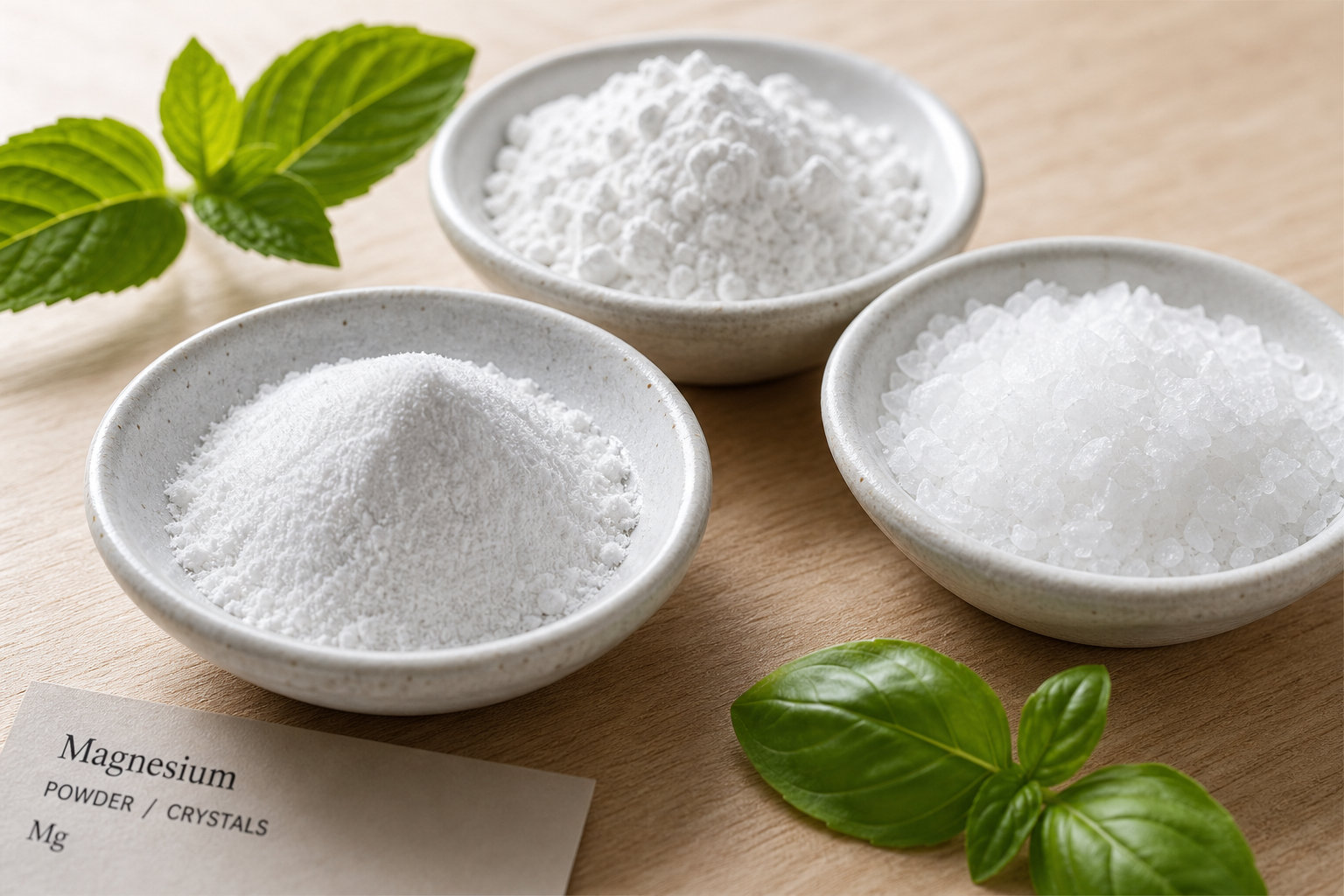
Magnesium does not float around your body on its own. It needs to be bound to another molecule (called a chelate) to remain stable and absorbable. The partner molecule determines how well your gut absorbs the magnesium, where it ends up in your body, and what side effects you might experience.
Some forms, like magnesium oxide, are poorly absorbed and mostly function as laxatives. Others, like glycinate and threonate, are highly bioavailable and cross into specific tissues more effectively. The form you choose is not just marketing, it is chemistry that affects outcomes.
Magnesium glycinate: the sleep and relaxation form
Magnesium glycinate pairs magnesium with glycine, an amino acid that has its own calming properties. This combination makes it particularly useful for people struggling with sleep quality, anxiety, or muscle tension.
Glycine acts as an inhibitory neurotransmitter, meaning it helps quiet nervous system activity. Studies show glycine can lower core body temperature slightly and promote deeper sleep stages. When you combine that with magnesium’s role in regulating GABA (the brain’s main calming neurotransmitter), you get a double benefit for relaxation.
Magnesium glycinate is also gentle on the digestive system. Unlike citrate or oxide, it rarely causes loose stools, making it suitable for people with sensitive stomachs or those taking higher doses. It is absorbed well and tends to be the go-to choice for people who want the calming, muscle-relaxing effects of magnesium without digestive disruption.
Best for: improving sleep quality, reducing nighttime muscle cramps, easing anxiety, or general magnesium supplementation without gut upset.
Magnesium citrate: the digestion and replenishment form
Magnesium citrate binds magnesium to citric acid. It is one of the most bioavailable forms, meaning your body absorbs it efficiently. It also has a notable laxative effect, which can be a feature or a bug depending on your needs.
If you deal with occasional constipation, magnesium citrate offers a gentle, natural solution. It draws water into the intestines, softening stool and stimulating bowel movements. Many people use it specifically for this purpose, and it works reliably without the harshness of stimulant laxatives.
Beyond digestion, magnesium citrate is excellent for general magnesium repletion. If you are deficient (common in people with high stress, heavy exercise, or poor diet), citrate gets magnesium into your system quickly and effectively. It supports muscle function, energy production, and cardiovascular health.
The downside is the digestive effect. If you are not looking for a laxative, citrate can cause loose stools or urgency, especially at higher doses. Start low (200-300 mg) and see how your body responds.
Best for: relieving constipation, replenishing magnesium levels quickly, supporting athletic recovery, or boosting general energy and muscle function.
Magnesium threonate: the brain and cognition form
Magnesium L-threonate is the newest and most specialized form on this list. It was developed specifically to cross the blood-brain barrier more effectively than other magnesium types, making it uniquely suited for cognitive support.
Research from MIT showed that magnesium threonate increases magnesium levels in the brain and enhances synaptic density (the number of connections between neurons). In animal studies, it improved learning, working memory, and both short-term and long-term memory. Human trials, though still limited, suggest benefits for focus, mental clarity, and age-related cognitive decline.
Magnesium plays a key role in neuroplasticity, the brain’s ability to form new connections and adapt. Threonate appears to deliver magnesium where it is most needed for this process. If your goal is sharper thinking, better memory, or cognitive longevity, this is the form with the most targeted mechanism.
The trade-off is cost. Magnesium threonate is significantly more expensive than glycinate or citrate, and it provides less elemental magnesium per dose. You may need to take more capsules to reach a therapeutic magnesium level, or combine it with another form for general supplementation.
Best for: supporting memory and learning, improving focus and mental clarity, cognitive aging, or pairing with other nootropics like lion’s mane mushroom.
Quick comparison chart
Magnesium Glycinate
Primary goal: Sleep, relaxation, muscle tension
Absorption: High
Digestive effect: Gentle, rarely causes loose stools
Typical dose: 200-400 mg before bed
Best paired with: Evening routine, calming teas, or sleep gummies
Magnesium Citrate
Primary goal: Digestion, general replenishment, energy
Absorption: High
Digestive effect: Laxative, draws water into intestines
Typical dose: 200-400 mg with food
Best paired with: Hydration strategies, post-workout recovery
Magnesium Threonate
Primary goal: Cognitive function, memory, focus
Absorption: High, crosses blood-brain barrier
Digestive effect: Minimal
Typical dose: 1,500-2,000 mg (elemental magnesium ~150-200 mg)
Best paired with: Nootropics, mental performance routines
How to choose your form
Start by identifying your primary goal. If sleep or anxiety is your main concern, glycinate is the clear winner. If you need digestive support or want to raise magnesium levels quickly, citrate makes sense. If you are focused on cognitive performance or brain health, threonate is worth the investment.
You can also combine forms. Many people take citrate during the day for energy and muscle support, and glycinate at night for sleep. Or they use threonate for cognitive benefits and add glycinate to reach their total magnesium target without overspending.
Pay attention to how your body responds. Magnesium is generally safe, but too much can cause diarrhea (especially with citrate) or excessive relaxation. Start with the lower end of the dosage range and adjust based on effects. Most people benefit from 200-400 mg of elemental magnesium daily, but individual needs vary based on diet, stress, and activity level.
Whatever form you choose, consistency matters more than perfection. Magnesium works best when taken regularly, not just when you remember or feel off. Building it into your daily routine, whether morning or evening, helps you actually experience the benefits rather than wondering if it is working.
Final thoughts
The magnesium aisle does not have to be overwhelming once you understand the basics. Glycinate calms and supports sleep, citrate moves things along and replenishes quickly, and threonate targets your brain. Each has solid science behind it, and each serves a different purpose.
If you are still unsure, glycinate is a safe starting point for most people. It covers the common bases (sleep, relaxation, general supplementation) without the digestive unpredictability of citrate or the higher cost of threonate. From there, you can experiment and adjust based on what you notice.
You can find all three forms, along with other evidence-backed supplements like ashwagandha and shilajit, in our shop. Magnesium is one of those rare supplements with broad benefits and a strong safety profile. Choose the form that matches your goal, give it a few weeks, and pay attention to the difference.