- Written on
- 8 min. reading time

Microdosing for musicians has quietly become a tool for enhancing practice sessions, deepening improvisation, and managing performance anxiety. Amateur and semi-professional performers are using fresh psilocybin truffles in sub-perceptual doses—typically around 0.5 grams—to access a more fluid creative state without compromising technical control. The practice supports mental flexibility, emotional presence, and subtle shifts in how musicians connect with their instrument and audience.
Why musicians are exploring microdosing
Music demands both technical precision and expressive spontaneity. Microdosing appears to support that balance. Many performers report that a low dose before practice or performance creates a gentle opening—less mental chatter, more attunement to the present moment.
Unlike higher doses that might create distraction or perceptual distortion, microdoses remain below the threshold of noticeable psychoactive effects. The goal is enhanced function, not altered consciousness. Musicians describe improved pattern recognition, better rhythmic intuition, and easier access to ‘flow’ states where playing feels effortless and immersive.
For those new to the practice, our starter pack includes everything you need to begin safely and consistently.
What does microdosing for musicians feel like?
The effects are subtle and often noticed in hindsight rather than in real time. Musicians typically describe:
- Enhanced listening: Picking up on nuances in tone, timing, and dynamics more easily
- Reduced self-consciousness: Less worry about mistakes, more trust in instinct
- Improved improvisation: Smoother transitions between ideas, fewer mental blocks
- Greater emotional range: Easier access to vulnerability and expressiveness
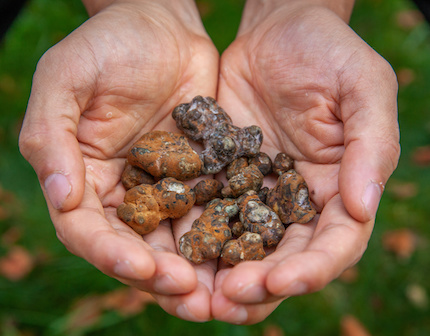
These shifts are most often reported when using fresh psilocybin truffles in the 0.3 to 0.7 gram range. Fresh truffles from GO Microdose are measured for consistency, which matters when dosing regularly around practice or performance schedules.
It’s worth noting that dried mushrooms or truffles use very different dosing—around 0.1 to 0.3 grams—but since we supply fresh truffles, you’ll be working with higher weights. The conversion is roughly 1 gram dried equals 3 grams fresh. Use our dosage calculator if you’re switching formats or comparing protocols.
Microdosing before practice versus live performance
Most musicians integrate microdosing during practice sessions first. This allows time to observe effects, calibrate dose, and build familiarity before bringing the practice into high-stakes settings. Practice is lower pressure, which makes it easier to notice subtle changes in focus, timing, and creative flow.
Taking a microdose before a live show or rehearsal is more nuanced. Some performers find it reduces stage anxiety and enhances connection with the audience. Others prefer to microdose on rest days or during solo practice, keeping performances strictly sober to maintain full control.
If you’re considering a dose before performance, test the same amount and timing during a low-pressure rehearsal first. Psilocybin can heighten sensory input and emotional sensitivity—helpful in some contexts, overwhelming in others. Start small and give yourself permission to adjust.
How to dose fresh psilocybin truffles as a musician
The typical microdose range for fresh truffles is 0.3 to 0.7 grams, with 0.5 grams being a common starting point. Sensitivity varies widely, so it’s best to begin at the lower end—especially if you’re planning to dose before playing with others or performing.
Timing matters. Effects usually begin within 45 to 90 minutes and last four to six hours. If you’re microdosing before a practice session, take your dose an hour beforehand. For live performance, consider that adrenaline and external stimuli may interact with the subtle effects in unexpected ways.
Consistency supports better insight. Many musicians follow a structured protocol—such as dosing once every three days—to observe patterns without building tolerance. You can explore different approaches in our microdosing courses, which cover timing, journaling, and how to refine your routine.
If you’re curious about why some people feel very little on their first few doses, our article on why some people feel nothing on microdoses covers common factors like individual neurochemistry and expectation setting.
Improvisation and the role of psilocybin
Improvisation is where microdosing for musicians shows the most consistent anecdotal benefit. Jazz players, experimental composers, and jamming session regulars often describe a sense of expanded musical possibility—less attachment to familiar patterns, more willingness to explore unfamiliar harmonic or rhythmic territory.
Psilocybin at low doses appears to encourage divergent thinking, the cognitive mode associated with generating novel ideas. In musical terms, that might translate to faster chord substitutions, unexpected melodic choices, or smoother transitions between contrasting sections.
There’s also a relational element. Musicians report feeling more connected to their bandmates during group improvisation—less ego, more listening, a sense of playing ‘with’ rather than ‘alongside’ others. This aligns with research suggesting psilocybin may reduce activity in the brain’s default mode network, which governs self-referential thought.
Managing stage nerves with microdosing
Performance anxiety is one of the most common reasons musicians explore microdosing. The physical symptoms—racing heart, shallow breathing, mental fog—can undermine even well-rehearsed material. Low-dose psilocybin doesn’t eliminate nerves, but some performers find it softens the self-critical inner voice that amplifies anxiety.
The key difference from beta-blockers or anxiolytics is that microdosing doesn’t dull emotion or dampen energy. Instead, it may shift the relationship to nervousness—allowing it to be present without becoming paralysing. Some musicians describe feeling ‘held’ by the music rather than fighting to control it.
That said, microdosing is not a substitute for foundational practices like deep breathing, mental rehearsal, or addressing underlying perfectionism. It’s a complementary tool, not a standalone solution. And for some, the unpredictability of a psychoactive substance—even a mild one—adds stress rather than relieving it. Know yourself and proceed thoughtfully.
Combining microdosing with other practices
Microdosing works best when embedded in a broader routine. Musicians who report the most benefit often pair their doses with practices like:
- Structured warm-ups: Scales, finger exercises, or ear training before diving into creative work
- Journaling: Tracking dose, timing, mood, and musical insights over weeks
- Meditation or breathwork: Grounding practices that complement the introspective quality of psilocybin
- Functional mushrooms: Lion’s mane for cognitive support or reishi for stress resilience on non-dosing days
Some performers also integrate lion’s mane capsules into their daily routine for sustained focus and memory support, independent of psilocybin microdosing. These can be taken continuously without the need for breaks.
If you’re interested in the science behind microdosing’s cognitive and emotional effects, our guide on the benefits of microdosing and what the research says offers a grounded overview of current evidence.
What to watch out for
Microdosing is generally well-tolerated, but individual responses vary. A few things to keep in mind as a musician:
- Timing variability: Effects may peak earlier or later depending on digestion, metabolism, and whether you’ve eaten
- Overstimulation: In loud or chaotic environments, sensory enhancement can tip into overwhelm
- Tolerance: Dosing too frequently reduces effectiveness. Stick to a protocol with rest days to maintain sensitivity
- Emotional openness: You may feel more vulnerable or emotionally reactive, which can be useful creatively but destabilising in stressful settings
If you notice diminishing effects, consider a tolerance reset—a break of one to two weeks to restore baseline sensitivity.
And remember: microdosing is a personal experiment. What works brilliantly for one musician may feel distracting or unhelpful for another. Trust your own experience over anecdote.
Storing your fresh truffles
Fresh psilocybin truffles from GO Microdose stay potent for two to three months when refrigerated in their original vacuum-sealed packaging. Once opened, use them within three to five days, or dry them for long-term storage.
If you’re drying truffles at home, keep the temperature below 40°C to preserve psilocybin content. A food dehydrator or fan in a dark, dry space works well. For detailed guidance, see our article on how to dry your truffles for long-term storage.
Consistent potency matters when you’re dosing around a performance or practice schedule, so proper storage is worth the attention.
Frequently asked questions
Can I microdose before a live performance?
Some musicians do, but it’s best to test the same dose and timing during rehearsals or low-pressure sessions first. Microdosing can enhance presence and reduce anxiety, but it may also heighten sensory input or emotional sensitivity in unpredictable ways. Know how your body responds before bringing it onstage.
What’s the best microdose for a musician using fresh truffles?
Most people start with 0.5 grams of fresh psilocybin truffles and adjust from there. The effective range is typically 0.3 to 0.7 grams. Sensitivity varies, so begin on the lower end—especially if you’re playing with others or performing publicly.
How long before practice should I take a microdose?
Effects usually begin 45 to 90 minutes after ingestion and last four to six hours. Taking your dose an hour before practice gives time for onset without waiting too long. If dosing before a performance, factor in timing carefully and test it beforehand.
Will microdosing improve my improvisation?
Many musicians report smoother improvisation, less attachment to familiar patterns, and greater willingness to explore new ideas. Psilocybin at low doses may encourage divergent thinking and reduce self-criticism, both helpful for spontaneous creative work. Results vary, so approach it as an experiment.
How often should musicians microdose?
Most protocols involve dosing once every three days to avoid tolerance and allow integration. Some musicians dose only on practice days, others follow a fixed schedule. Consistency helps you observe patterns, and rest days preserve sensitivity over time.
Can I combine microdosing with other supplements?
Yes. Many musicians pair microdosing with lion’s mane for cognitive support, magnesium for calm, or reishi for stress resilience. These can be taken daily without interfering with your psilocybin protocol. Avoid combining with alcohol or other psychoactive substances without understanding the interactions.
Final thoughts
Microdosing for musicians is a growing practice rooted in curiosity, self-experimentation, and a desire to deepen creative presence. Whether you’re navigating stage nerves, exploring improvisation, or simply looking to practise with more flow, fresh psilocybin truffles offer a gentle, accessible tool. Start small, stay consistent, and let your experience guide the way. Explore our full range of microdosing products and resources to support your journey.