- Written on
- 10 min. reading time

Psilocybin neuroplasticity refers to how psilocybin, the active compound in magic truffles and mushrooms, helps the brain form new neural connections and pathways. Unlike many substances that simply alter brain chemistry temporarily, psilocybin appears to create windows of enhanced brain flexibility that can last weeks after a single dose. This happens through increased production of brain-derived neurotrophic factor (BDNF) and the growth of new dendritic spines, the tiny branches that allow neurons to communicate. Understanding this mechanism helps explain why both microdosing and larger therapeutic doses can support lasting change in thought patterns, habits, and emotional responses.
What is neuroplasticity and why does it matter?
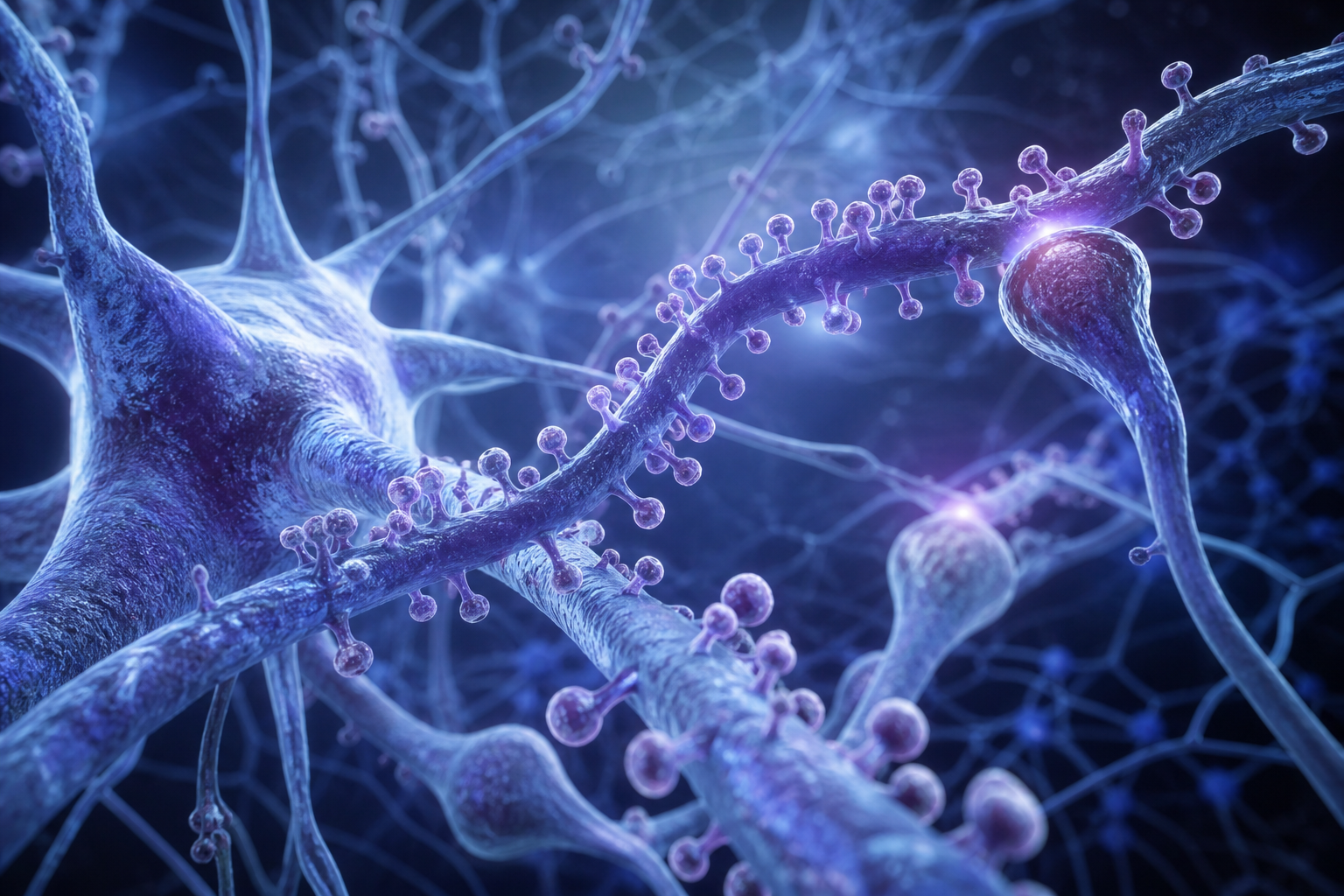
Neuroplasticity is your brain’s ability to reorganize itself by forming new neural connections throughout life. Think of it as your brain’s capacity to learn, adapt, and rewire itself in response to experience, thought patterns, or injury.
This matters because many mental health challenges involve rigid neural patterns: depression often means being stuck in negative thought loops, anxiety involves hyperactive fear circuits, and addiction creates powerful habit pathways. When neuroplasticity is enhanced, these entrenched patterns become more flexible and easier to reshape.
Most of us experience declining neuroplasticity as we age. Childhood brains are incredibly plastic, which is why children learn languages and skills so rapidly. Adult brains become more fixed, with established patterns running on autopilot. Psilocybin appears to temporarily restore a state of enhanced plasticity, creating opportunities for meaningful change.
How does psilocybin promote neuroplasticity?
Psilocybin promotes neuroplasticity through several interconnected mechanisms, all centred on how it interacts with serotonin receptors in the brain.
When you consume fresh psilocybin truffles, your body converts psilocybin into psilocin, which strongly activates the 5-HT2A serotonin receptor. This receptor is densely concentrated in the prefrontal cortex and other regions involved in cognition, perception, and mood. Activating these receptors triggers a cascade of changes at the cellular level.
Research shows that psilocybin increases the expression of genes related to neuroplasticity within hours of administration. These genes instruct cells to produce more plasticity-promoting proteins, setting the stage for structural brain changes. The effects appear dose-dependent but occur even at sub-perceptual microdoses, though the magnitude differs.
What is BDNF and how does psilocybin increase it?
Brain-derived neurotrophic factor (BDNF) is a protein that acts like fertilizer for your brain. It supports the survival of existing neurons and encourages the growth and differentiation of new neurons and synapses.
BDNF is essential for learning and memory. When you learn something new or form a memory, BDNF helps strengthen the connections involved. Low BDNF levels are consistently found in people with depression, and many effective antidepressants work partly by increasing BDNF over time.
Psilocybin appears to rapidly boost BDNF production through its action on 5-HT2A receptors. Animal studies show increased BDNF expression in the hippocampus and prefrontal cortex following psilocybin administration. This increase happens relatively quickly, within hours to days, compared to the weeks required for conventional antidepressants to have similar effects.
The BDNF increase may help explain why therapeutic effects can emerge rapidly and persist long after the substance has left your system. The benefits of microdosing with fresh truffles (typically around 0.5 grams) may accumulate through repeated small increases in BDNF, while higher doses create more dramatic spikes.
What are dendritic spines and why do they grow?
Dendritic spines are tiny protrusions on the branches of neurons that receive signals from other neurons. They look like small mushrooms or thorns extending from the dendrite surface. Each spine forms a connection point, or synapse, where communication between neurons occurs.
The density and structure of dendritic spines directly correlate with brain plasticity. More spines mean more potential connections. Stronger, more mature spines indicate stable, well-used pathways. Conversely, chronic stress and depression are associated with spine loss and atrophy, particularly in the prefrontal cortex and hippocampus.
Recent research using advanced imaging techniques has shown that psilocybin promotes dendritic spine growth remarkably quickly. Within 24 hours of administration, neurons show increased spine density. These new spines represent potential new connections, new ways for brain regions to communicate.
This spine growth appears to be a key mechanism underlying psilocybin neuroplasticity. The new spines create physical infrastructure for new thought patterns, habits, and emotional responses to take root. They provide the hardware for the software changes people experience during therapeutic work or personal development with psilocybin.
How long does enhanced neuroplasticity last?
The enhanced plasticity window opened by psilocybin appears to extend well beyond the acute effects. While the subjective experience of a dose lasts 4-8 hours, the neuroplastic changes persist much longer.
Studies suggest a ‘critical period’ of heightened plasticity lasting days to weeks after administration. During this window, the brain remains more receptive to change, learning, and rewiring. This explains why therapeutic protocols often emphasize integration work in the days and weeks following a session, when new insights and patterns are most likely to consolidate.
For microdosing protocols, the plasticity effects may accumulate differently. Rather than opening one dramatic window, regular small doses (around 0.5 grams of fresh truffles every few days) may maintain a more sustained state of enhanced flexibility. Many people following microdosing protocols report gradual shifts in perspective and behaviour over weeks and months.
The durability of changes depends partly on what you do during the plasticity window. Neural connections that are used and reinforced become stable; those that aren’t may fade. This is why combining psilocybin with therapy, meditation, or intentional practice tends to produce more lasting results than passive consumption.
Does microdosing create the same neuroplastic effects?
Microdosing with fresh psilocybin truffles (typically 0.3 to 0.7 grams, with 0.5 grams being average) appears to promote neuroplasticity through similar mechanisms as higher doses, but at a different scale and tempo.
Research specifically on microdosing remains limited, but available evidence suggests sub-perceptual doses still activate 5-HT2A receptors, increase BDNF, and promote dendritic spine growth. The magnitude is smaller per dose, but the cumulative effect over weeks of consistent practice may be substantial.
One advantage of microdosing is that people can maintain normal daily function while the neuroplastic effects accumulate. You can work, learn new skills, attend therapy, or practice meditation while microdosing, potentially reinforcing new neural pathways in real-world contexts. This differs from high-dose sessions that require set-aside time and produce more disruptive, though potentially more dramatic, effects.
Many users report that starting a microdosing practice helps them break out of rumination, approach challenges with fresh perspective, and build new habits more easily. These subjective reports align well with what we’d expect from enhanced neuroplasticity, even if the mechanisms aren’t yet fully mapped at microdose levels.
What does this mean for mental health and personal growth?
Understanding psilocybin neuroplasticity helps explain its therapeutic potential beyond simple symptom relief. Rather than masking problems, psilocybin may help the brain physically rewire itself toward healthier patterns.For depression, enhanced neuroplasticity may allow people to break free from rigid negative thought patterns. The new dendritic spines and increased BDNF create opportunities for different emotional responses and interpretations of experience to take root. Clinical trials have shown lasting improvements in treatment-resistant depression following psilocybin therapy, with brain imaging confirming increased connectivity between previously isolated regions.
For anxiety and trauma, neuroplasticity may help the brain update fear responses and recontextualize difficult memories. The plasticity window allows therapeutic work to have greater impact, helping people integrate experiences rather than remaining stuck in repetitive loops.
For personal growth and optimization, psilocybin neuroplasticity supports learning, creativity, and habit formation. Some users report enhanced language learning, artistic breakthroughs, or successful behaviour change during or after periods of microdosing, consistent with a more plastic, adaptable brain state.[/vc_column_text]
Are there practical ways to enhance the neuroplastic effects?
Yes. Since neuroplasticity creates potential for change rather than guaranteeing specific outcomes, what you do during the enhanced plasticity window matters enormously.
Practices that support neuroplastic change include:
- Intentional learning: Engage with new skills, languages, or knowledge during your protocol. The plastic brain state makes learning easier and more durable.
- Therapy or journaling: Process emotions, examine thought patterns, and consciously rehearse new perspectives. This helps guide which new connections strengthen.
- Meditation and mindfulness: These practices independently promote neuroplasticity and may synergize with psilocybin’s effects.
- Physical exercise: Movement increases BDNF on its own and supports overall brain health, potentially amplifying benefits.
- Quality sleep: Sleep is when the brain consolidates new connections. Prioritizing rest during a psilocybin protocol helps lock in changes.
Combining microdosing with functional mushrooms like lion’s mane, which also supports BDNF and nerve growth factor, is a popular approach. The Paul Stamets stack specifically pairs psilocybin microdoses with lion’s mane and niacin based on this synergistic logic.
What are the limitations of current research?
While the evidence for psilocybin neuroplasticity is growing rapidly, important gaps remain. Most mechanistic studies use animal models, typically rodents, and we can’t be certain all findings translate directly to humans. Human brain imaging studies confirm increased connectivity and blood flow changes, but directly observing dendritic spine growth in living human brains remains technically impossible.
Microdosing research specifically lags behind studies of therapeutic doses. We have strong evidence for neuroplastic effects at higher doses but must extrapolate cautiously to microdose levels. The optimal dosing, frequency, and duration for maximizing neuroplastic benefits without diminishing returns or tolerance remain active research questions.
Individual variation is another frontier. Not everyone responds identically to psilocybin, and we don’t yet understand who benefits most or why. Genetics, prior experience, mental state, and environmental context all likely influence outcomes, but predictive models don’t exist yet.
Finally, while neuroplasticity is necessary for therapeutic change, it’s not sufficient on its own. A plastic brain can rewire toward positive or negative patterns depending on what’s reinforced. This is why set, setting, and integration matter, and why psilocybin is best understood as a tool rather than a cure.
Frequently asked questions
How much psilocybin is needed to promote neuroplasticity?
Research suggests neuroplastic effects occur across a range of doses. Therapeutic studies typically use 10-25mg of pure psilocybin (equivalent to roughly 15-30 grams of fresh truffles at recreational strength). Microdosing with 0.5 grams of fresh truffles likely produces smaller but still meaningful effects on BDNF and spine growth, though more research is needed to map the full dose-response relationship.
Does psilocybin neuroplasticity work for everyone?
Most people appear to experience neuroplastic effects from psilocybin, but individual responses vary. Factors like genetics, medication use (especially SSRIs, which can block 5-HT2A receptors), mental state, and context all influence outcomes. Some people are naturally more sensitive or responsive than others. If you feel nothing during your first microdosing attempts, dosage adjustment or protocol changes may help.
Can you measure neuroplasticity changes from psilocybin?
Directly measuring dendritic spine growth in living humans isn’t currently possible, but researchers use proxy measures. Brain imaging (fMRI) can detect increased connectivity between brain regions. Cognitive tests can measure improvements in learning or flexibility. Blood tests might eventually detect BDNF changes, though this is still experimental. Most evidence comes from animal studies with direct neural observation and human studies measuring functional outcomes.
How does psilocybin neuroplasticity compare to other methods?
Psilocybin appears to promote neuroplasticity more rapidly and robustly than most other interventions. Standard antidepressants increase BDNF gradually over weeks. Exercise, meditation, and learning all enhance plasticity but typically more slowly. Psilocybin’s advantage is creating a dramatic, time-limited window of heightened plasticity that can be paired with intensive therapeutic or personal development work for accelerated change.
Do the neuroplastic effects reverse when you stop taking psilocybin?
The new neural connections formed during the plasticity window can become permanent if they’re used and reinforced, but unused connections will eventually prune away. This is normal brain function. The key is what you do during and after your psilocybin protocol. Changes integrated through therapy, practice, and daily life tend to stick. Passive consumption without intentional work is less likely to produce lasting structural changes.
Can you combine psilocybin with other neuroplasticity-enhancing substances?
Yes, with appropriate caution. The Paul Stamets stack combines microdosed psilocybin with lion’s mane (which supports nerve growth factor and BDNF) and niacin (which may enhance distribution). Some people add meditation, exercise, or other practices known to support brain plasticity. However, avoid combining psilocybin with psychiatric medications without medical guidance, as interactions can be dangerous or reduce effectiveness.
Conclusion
Psilocybin neuroplasticity represents one of the most exciting frontiers in neuroscience and mental health. By increasing BDNF, promoting dendritic spine growth, and opening windows of enhanced brain flexibility, psilocybin creates opportunities for meaningful, lasting change in thought patterns, emotional responses, and behaviour. Whether you’re exploring microdosing with fresh truffles or considering therapeutic doses, understanding these mechanisms helps you approach the practice with realistic expectations and maximize the potential for growth. The science is still emerging, but what we know so far suggests psilocybin offers a powerful tool for those seeking to rewire their brains toward greater wellbeing.