- Written on
- 8 min. reading time

Chaga tea rituals have been a cornerstone of Siberian and northern European wellness traditions for centuries. Long before modern supplements, forest communities relied on this birch-dwelling fungus for warmth, vitality and resilience through harsh winters. Today, chaga is gaining recognition worldwide for its antioxidant content and immune-supporting properties. Whether you’re drawn to its cultural heritage or simply want a caffeine-free alternative to your morning brew, chaga tea offers a grounding daily ritual with deep historical roots.
What is chaga and why was it sacred to Siberian cultures?
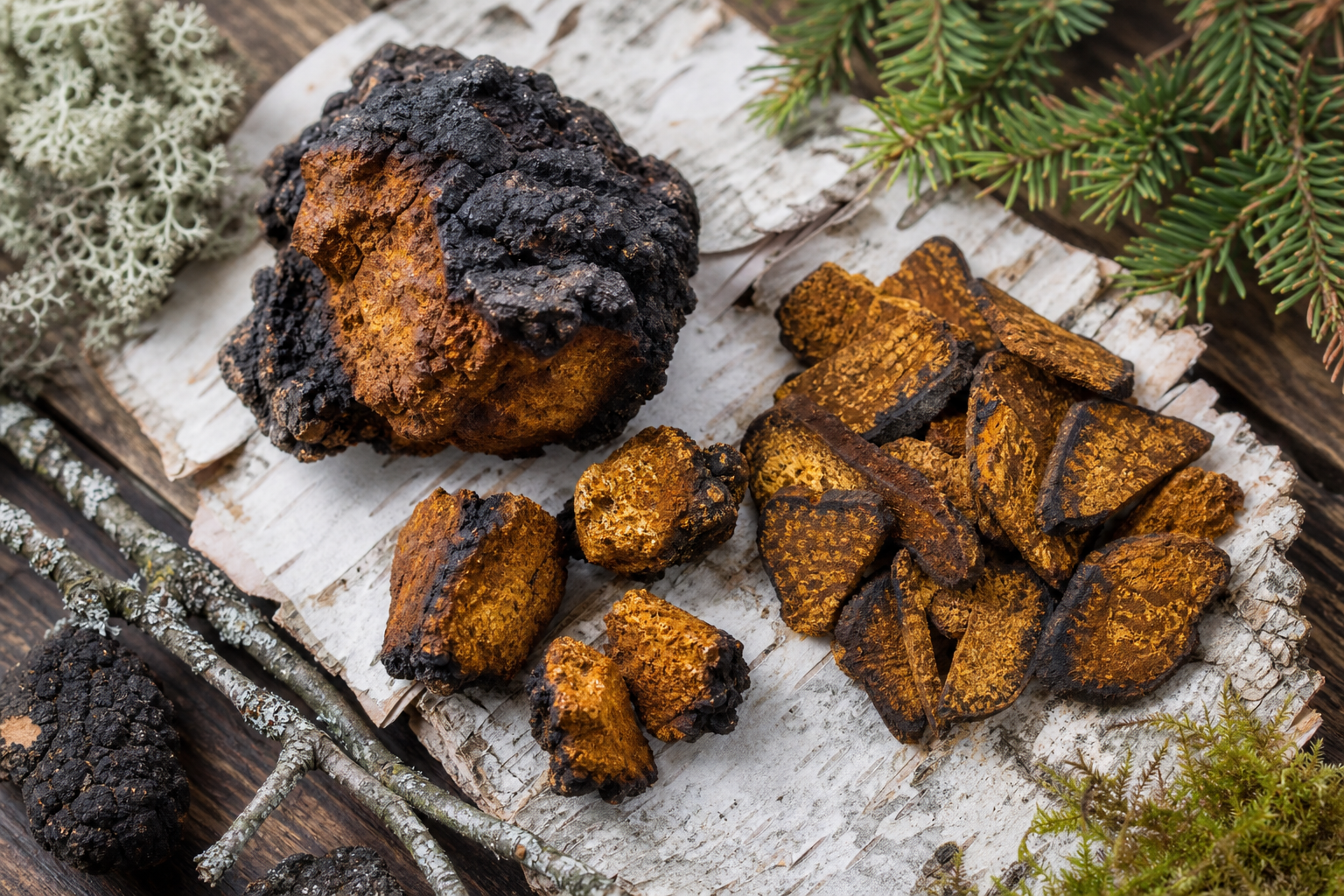
Chaga (Inonotus obliquus) is a parasitic fungus that grows primarily on birch trees in cold climates across Siberia, northern Canada, Alaska and Scandinavia. It appears as a dark, charred-looking mass clinging to the tree trunk, often mistaken for burnt wood. Inside, however, chaga is golden-brown and cork-like, packed with bioactive compounds absorbed from the birch bark itself.
For indigenous Siberian groups including the Khanty, Evenki and Nenets peoples, chaga was far more than a beverage. It was considered a gift from the forest spirits, used ceremonially and medicinally to treat stomach ailments, support digestion, and fortify the body against extreme cold. The fungus was boiled into a dark, earthy tea and consumed daily, often shared among family members as part of morning and evening routines. In Russian folk medicine, chaga was referred to as the ‘mushroom of immortality’ and valued as highly as ginseng in other cultures.
Chaga’s bioactive profile includes polysaccharides, beta-glucans, melanin, and a remarkable concentration of antioxidants. Its ORAC (oxygen radical absorbance capacity) score is among the highest measured in any natural food. Modern research has begun to validate traditional uses, showing immune-modulating, anti-inflammatory and potential anticancer properties in laboratory studies, though human clinical trials remain limited.
How did chaga tea rituals spread beyond Siberia?
Chaga remained relatively unknown outside of Russia and northern indigenous communities until the mid-20th century. Its broader introduction to the West is often credited to Russian novelist Alexandr Solzhenitsyn, whose 1968 semi-autobiographical novel Cancer Ward recounted his experience with chaga tea during treatment for cancer. The book sparked curiosity among readers and researchers, prompting a wave of studies in the Soviet Union during the 1950s and 60s.
By the 1990s and 2000s, chaga began appearing in health food stores across Europe and North America, typically as dried chunks, powder or extracts. The wellness boom of the 2010s brought functional mushrooms into mainstream consciousness, and chaga joined lion’s mane, reishi and cordyceps as one of the most sought-after adaptogens. Unlike its fungal cousins, chaga is not technically a mushroom but a sclerotium, a dense mycelial mass, which gives it a unique texture and flavour profile.
Today, chaga is harvested sustainably in the wild and sometimes cultivated on birch logs, though wild-harvested chaga is generally considered superior due to its richer nutrient profile. At GO Microdose, our Chaga capsules and Chaga liquid are dual-extracted to preserve both water-soluble polysaccharides and alcohol-soluble triterpenes, ensuring you get the full spectrum of benefits.
What does chaga tea taste like?
Chaga tea has a mild, earthy flavour with subtle notes of vanilla and a slightly bitter finish. It is not as assertive as coffee or black tea, making it easy to drink on its own or blend with other ingredients. The taste varies depending on how long you brew it: a short steep yields a light, woody infusion, while a longer simmer produces a darker, more robust brew with a tannic edge.
Many people describe chaga as naturally grounding and comforting, with a smooth mouthfeel that pairs well with milk, honey or warming spices like cinnamon and ginger. Unlike caffeinated teas, chaga does not produce jitters or crashes, which is why it has become a popular choice for evening rituals or as a midday reset.
How to brew traditional chaga tea at home
Brewing chaga tea the traditional way is simple and meditative. Here is a step-by-step method based on Siberian practices:
- Use raw chaga chunks: If you have whole chaga, break off a fist-sized piece (about 50-100 grams). If using powdered chaga, skip to the next step.
- Simmer, do not boil: Place the chaga in a pot with 1-2 litres of water. Heat until just below boiling (around 80-90°C) and maintain this temperature. Boiling can degrade some of chaga’s heat-sensitive compounds.
- Steep for at least 1 hour: Traditional recipes call for slow simmering over several hours, sometimes overnight. A minimum of 1 hour will produce a richly coloured, amber tea. The longer you simmer, the darker and stronger it becomes.
- Reuse the chunks: Chaga pieces can be reused multiple times. Store them in the fridge between brews and add fresh water each time. After 3-5 uses, the colour will lighten, signalling the chaga is spent.
- Strain and serve: Pour the tea through a fine mesh strainer. Drink it plain, or add a splash of oat milk, a spoonful of honey, or a cinnamon stick for extra warmth.
For a quicker option, chaga powder can be steeped for 10-15 minutes in hot water, though the flavour will be lighter than the slow-simmered version. If you prefer convenience without sacrificing potency, our functional mushroom supplements offer standardised extracts in capsule and liquid form.
How to integrate chaga into a daily wellness routine
Chaga tea rituals fit naturally into morning and evening routines. Because chaga is caffeine-free, it will not interfere with sleep, making it ideal for winding down after dinner or as a reflective pause before bed. Many people brew a large batch on Sunday evening and sip it throughout the week, reheating individual cups as needed.
Here are a few ways to weave chaga into your day:
- Morning grounding: Replace or alternate your coffee with a mug of warm chaga tea. Pair it with journaling, stretching or a few minutes of breathwork to set a calm, intentional tone for the day.
- Afternoon reset: If you experience a post-lunch energy dip, chaga offers a gentle lift without stimulants. Its immune-supporting properties also make it a sensible choice during colder months.
- Evening ritual: Brew a fresh cup before bed and sip it slowly, allowing the earthy warmth to signal the end of your day. Add a drop of reishi tincture for extra relaxation, or combine it with our Calm & Recovery Stack for a holistic wind-down routine.
- Blended elixirs: Mix chaga tea with other functional mushrooms like lion’s mane for focus or cordyceps for endurance. Add coconut oil or ghee for a creamy, latte-style beverage.
Consistency matters more than quantity. Siberian traditions emphasise daily use over months and years, rather than sporadic high doses. A single cup per day is a good starting point for most people.
Can you combine chaga with other supplements or adaptogens?
Chaga pairs well with other adaptogens and functional mushrooms, often enhancing their effects. In traditional Siberian use, chaga was occasionally combined with herbs like rhodiola, wild rosehip or pine needle tea. Modern practitioners have expanded on this, stacking chaga with supplements that support immunity, energy or stress resilience.
Some popular combinations include:
- Chaga + Reishi: Both are immune-modulating and calming, making this a powerful duo for evening relaxation and long-term vitality.
- Chaga + Lion’s mane: Chaga’s antioxidants support overall cellular health, while lion’s mane targets cognitive function and nerve growth. A good pairing for focus and mental clarity.
- Chaga + Ashwagandha: Chaga’s immune benefits complement ashwagandha’s cortisol-lowering effects, creating a balanced stack for stress and resilience. Our Ashwagandha KSM-66 uses a clinically studied extract with high bioavailability.
- Chaga + Cordyceps: For active individuals, this combination supports immune health and physical endurance without overstimulation.
There are no known contraindications between chaga and most supplements, but if you are on immunosuppressive medication or blood thinners, consult your healthcare provider before adding chaga to your routine, as it may enhance immune activity and affect platelet function.
Frequently asked questions
How much chaga tea should I drink per day?
Most traditional users consumed 1-3 cups daily. Start with one cup and observe how your body responds. Chaga is gentle and non-stimulating, so you can drink it morning or evening without concern for sleep disruption.
Can I drink chaga tea every day long-term?
Yes. Siberian cultures consumed chaga daily for generations without adverse effects. Modern herbalists consider it safe for long-term use. However, if you are on medication or have a medical condition, check with your doctor, especially if you have autoimmune disorders or take blood thinners.
What is the difference between chaga tea and chaga extract capsules?
Chaga tea is a water extraction made by simmering chunks or powder. It captures water-soluble polysaccharides and some antioxidants. Dual-extracted capsules and tinctures use both water and alcohol to extract a broader spectrum of compounds, including triterpenes. Capsules offer convenience and standardised dosing, while tea provides a ritualistic, sensory experience.
Can I sweeten chaga tea or add milk?
Absolutely. Honey, maple syrup, oat milk, coconut milk and warming spices all complement chaga’s earthy profile. Experiment to find what suits your palate. Some people enjoy it plain, while others prefer a creamy, lightly sweetened version.
Does chaga tea need to be refrigerated?
Brewed chaga tea can be stored in the fridge for up to one week. Reheat individual servings as needed. If you notice any off smell or mould, discard it. Dried chaga chunks and powder should be kept in an airtight container in a cool, dark place.
Where can I buy high-quality chaga?
Look for wild-harvested chaga from reputable suppliers, ideally sourced from birch forests in northern climates. At GO Microdose, we offer Chaga capsules and Chaga liquid that are dual-extracted and third-party tested for purity and potency.
Bringing chaga tea rituals into your life
Chaga tea rituals offer more than immune support and antioxidants. They invite slowness, presence and connection to ancestral practices that honoured the forest as healer and teacher. Whether you simmer a pot on a Sunday afternoon or reach for a capsule on a busy weekday, chaga remains a bridge between ancient wisdom and modern wellness. Explore our full range of functional mushroom supplements to find the form that fits your lifestyle best.