- Written on Modified on
- 6 min. reading time

The modern biohacking stack combines fresh psilocybin truffles, functional mushrooms, and adaptogens into a coherent toolkit for cognitive enhancement and stress resilience. Unlike isolated interventions, these compounds share overlapping mechanisms, from neuroplasticity support to HPA axis modulation, making them natural complements in a quantified-self protocol. This guide maps how GO Microdose’s product range fits the UK biohacker’s approach to performance optimisation.
What defines a biohacking stack?
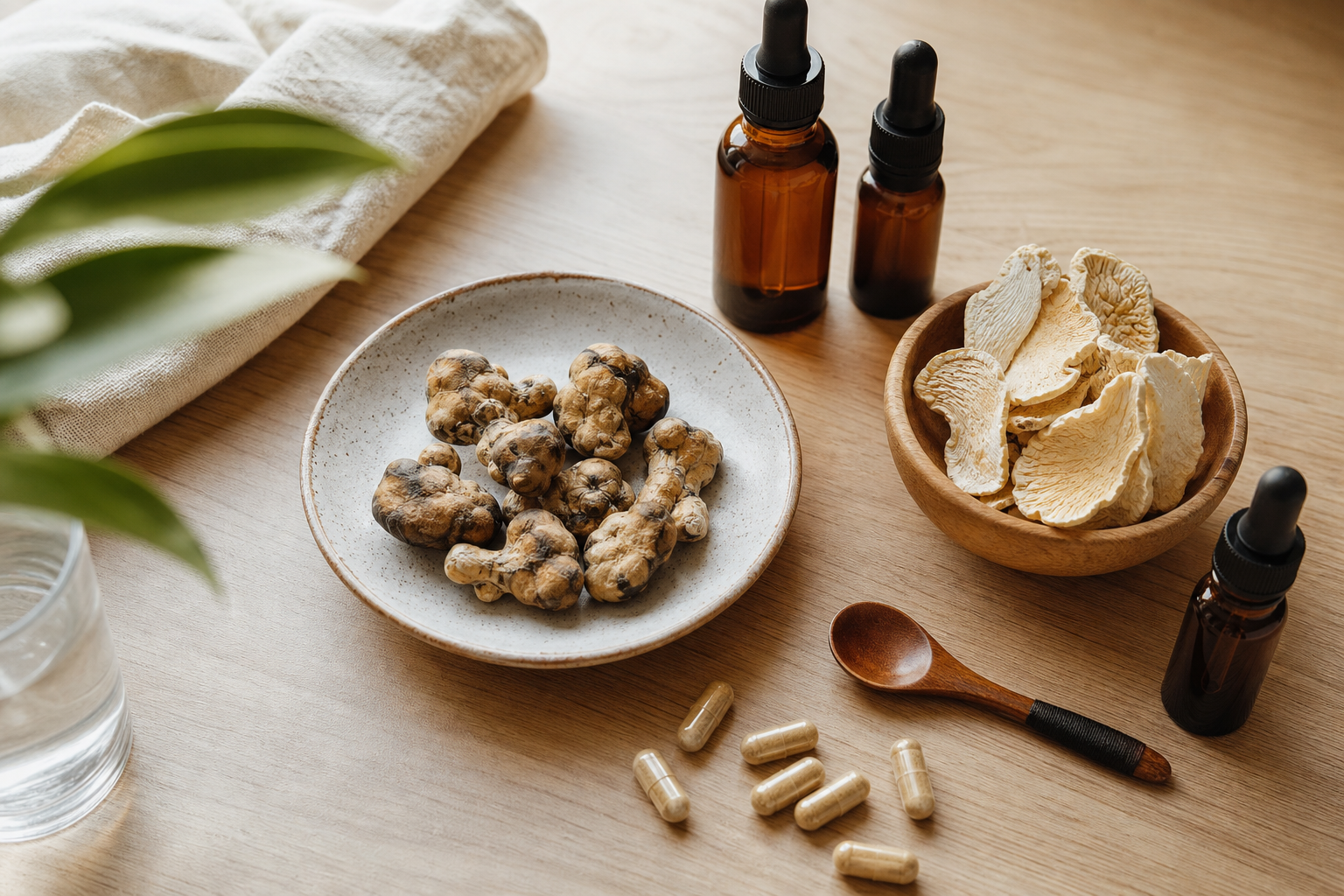
A biohacking stack is a deliberate combination of compounds, practices, or technologies used to optimise cognitive function, physical performance, or metabolic health. The goal is synergy: components that address different but complementary pathways.
For UK biohackers, this typically includes nootropics for focus, adaptogens for stress management, and increasingly, psychoactive compounds like psilocybin for neuroplasticity and pattern-breaking. The overlap between these categories is where things get interesting. Fresh truffles don’t just create short-term cognitive shifts, they may enhance the very neural flexibility that makes other interventions more effective.
Where psilocybin truffles fit the cognitive toolkit
Fresh psilocybin truffles occupy a unique position in the biohacking stack. At microdose levels, around 0.5 grams of fresh truffles, users report enhanced pattern recognition, creative problem-solving, and reduced cognitive rigidity without psychoactive disruption.
Research suggests psilocybin promotes neuroplasticity through 5-HT2A receptor activation, increasing brain-derived neurotrophic factor (BDNF) and dendritic spine growth. This creates a window where learning, habit formation, and cognitive reframing become more accessible. Our starter pack includes everything you need to begin a structured microdosing protocol.
For those tracking metrics, common biohacker endpoints include reaction time, working memory tasks, and subjective mood scores. Many users stack microdosing with existing nootropic regimens, timing their fresh truffle dose on specific protocol days, such as Fadiman (one day on, two days off) or Stamets (four days on, three days off).
Functional mushrooms for daily performance
While psilocybin truffles are used intermittently, functional mushrooms provide baseline cognitive and immune support. Lion’s mane, chaga, reishi, and cordyceps each target different systems:
- Lion’s mane: Stimulates nerve growth factor (NGF) synthesis, supporting neurogenesis and myelin repair. Ideal for focus, memory retention, and neuroprotection.
- Cordyceps: Enhances mitochondrial ATP production and oxygen utilisation. Popular among endurance athletes and those tracking VO2 max.
- Reishi: Modulates immune response and supports parasympathetic activation. Often used for sleep quality and stress resilience.
- Chaga: High in antioxidants, particularly melanin and polysaccharides. Used for inflammation management and skin health.
Our Daily Mushroom gummies combine several of these into a convenient format, making it simple to maintain consistent intake without powder preparation.
How adaptogens complement the biohacking stack
Adaptogens like ashwagandha and shilajit address the stress-performance trade-off that biohackers often encounter. High-output cognitive work, intense training, or chronic quantified-self experimentation can dysregulate cortisol rhythms and deplete mineral reserves.
Ashwagandha (KSM-66) lowers baseline cortisol, improves HRV (heart rate variability), and supports thyroid function. It pairs well with stimulating nootropics or cordyceps by dampening stress response without sedation. Typical dosing is 300-600 mg daily, taken in the evening to support recovery.
Shilajit is a mineral-rich resin that enhances mitochondrial efficiency and supports testosterone levels in men. It’s particularly valued by biohackers tracking energy expenditure, recovery metrics, or cognitive endurance during fasted states.
Both compounds act slowly, requiring 4-8 weeks for full effect. This makes them foundational rather than acute interventions, unlike a microdose of fresh truffles which may create noticeable shifts within hours.
Synergies worth exploring
The real value in a biohacking stack comes from thoughtful layering. Here are combinations UK biohackers are exploring:
- Psilocybin microdose + lion’s mane: Both promote neuroplasticity through complementary pathways. Paul Stamets advocates this pairing, adding niacin for peripheral nerve support.
- Cordyceps + ashwagandha: Energy enhancement without cortisol spike. Useful for high-intensity training blocks or demanding work periods.
- Reishi + magnesium: Evening stack for parasympathetic activation and deep sleep. Magnesium supports GABA transmission; reishi modulates immune-stress crosstalk.
- Shilajit + zinc: Mineral synergy for testosterone support, immune function, and mitochondrial health.
Our full product range includes each of these components, allowing you to design a protocol tailored to your metrics and goals.
Timing and protocol design
Effective biohacking requires structure. Here’s a sample framework combining multiple elements:
- Morning: 0.5 grams fresh psilocybin truffles (microdose days only), lion’s mane extract, cordyceps, zinc.
- Afternoon: Shilajit with meal containing fats for absorption.
- Evening: Ashwagandha, magnesium, reishi, sleep gummies if needed.
Use our dosage calculator to personalise your fresh truffle amount based on body weight and sensitivity. Track subjective and objective metrics: mood scores, cognitive task performance, HRV, sleep architecture, and recovery markers.
Cycle your interventions. Psilocybin microdosing works best with rest days built in. Adaptogens benefit from occasional wash-out periods (one week off every 8-12 weeks). Functional mushrooms can be taken daily long-term with minimal tolerance.
What to watch for
Stacking compounds increases complexity and individual variation. Start with one or two elements, establish baseline response, then layer carefully. Common pitfalls include:
- Overstimulation: Combining cordyceps, lion’s mane, and a microdose on the same morning may feel jittery for some. Adjust timing or dosing.
- Sedation stacking: Reishi, ashwagandha, and magnesium together can cause daytime drowsiness if taken too early.
- Ignoring diet and sleep: No biohacking stack compensates for poor fundamentals. Prioritise sleep hygiene, protein intake, and micronutrient status.
- Tolerance creep: If microdosing effects diminish, extend your rest days or take a full reset (2-4 weeks off).
Always store fresh truffles correctly: unopened packs last 2-3 months refrigerated; once opened, use within 3-5 days or dry them at temperatures below 40°C to preserve potency.
Frequently asked questions
Can I combine fresh psilocybin truffles with lion’s mane on the same day?
Yes, this is a common biohacking stack. Both support neuroplasticity through different mechanisms and are generally well-tolerated together. Start with standard doses: 0.5 grams fresh truffles and 500-1000 mg lion’s mane extract.
How long does it take to notice effects from functional mushrooms?
Lion’s mane and cordyceps may produce subtle effects within 1-2 weeks, but meaningful cognitive or performance changes typically emerge after 4-8 weeks of consistent use. Reishi and chaga work even more slowly, acting on immune and inflammatory pathways over months.
Should I take ashwagandha in the morning or evening?
Most biohackers prefer evening dosing (300-600 mg) to support cortisol reduction and sleep quality. Morning dosing can cause mild sedation in sensitive individuals, though some tolerate it well. Experiment and track your HRV response.
Do I need to cycle off my biohacking stack?
Psilocybin microdosing benefits from structured breaks to avoid tolerance. Adaptogens like ashwagandha can be cycled (one week off every 8-12 weeks). Functional mushrooms are generally safe for continuous long-term use without cycling.
What’s the best way to track results from my stack?
Use a combination of subjective logs (mood, focus, energy rated 1-10 daily) and objective metrics (HRV via wearable, cognitive tests like dual n-back, sleep scores). Change one variable at a time and allow 2-4 weeks before assessment.
Can I use electrolyte gummies alongside adaptogens?
Absolutely. Electrolyte gummies support hydration and mineral balance, which enhances the effectiveness of other supplements. They’re particularly useful during fasted training or high-output cognitive work when mineral depletion accelerates.
Building your biohacking stack
The intersection of fresh psilocybin truffles, functional mushrooms, and adaptogens creates a biohacking stack with layered benefits: neuroplasticity, sustained focus, stress resilience, and metabolic optimisation. Start with clear goals, track consistently, and adjust based on data rather than trends. GO Microdose offers the full toolkit for evidence-based cognitive enhancement tailored to the UK biohacker.