- Written on
- 8 min. reading time

Adaptogens UK professionals are using daily have moved far beyond wellness trends. From City traders to Manchester tech founders, British biohackers are stacking ashwagandha, lion’s mane, and cordyceps to manage stress, sharpen focus, and sustain energy without pharmaceutical stimulants. The approach is methodical: track baselines, stack intentionally, adjust based on measurable outcomes. Here’s what the UK biohacking scene is actually doing, and what the evidence suggests about these combinations.
What are adaptogens and why are UK professionals interested?

Adaptogens are plants and fungi that help the body respond to physical, chemical, and biological stress. The term originates from Soviet research in the 1940s, but modern interest centres on three mechanisms: modulating cortisol response, supporting mitochondrial function, and regulating neurotransmitter activity.
British professionals gravitate toward adaptogens for practical reasons. London’s finance sector runs on performance under pressure. Manchester and Bristol’s startup ecosystems reward sustained output. Adaptogens offer a non-pharmaceutical route to managing chronic stress and cognitive load, which resonates in a culture historically sceptical of ‘quick fixes’ but open to evidence-based self-experimentation.
The UK market has matured. Five years ago, adaptogens were niche. Today, Boots stocks ashwagandha, Holland & Barrett dedicates shelf space to functional mushrooms, and biohacking communities across London, Manchester, and Edinburgh share dosing protocols on private Slack channels and Telegram groups.
Which adaptogens are British biohackers stacking?
Three combinations dominate the adaptogens UK scene, each targeting a specific performance outcome.
The focus stack: lion's mane and cordyceps
Lion’s mane supports nerve growth factor (NGF) production, which influences neuroplasticity and cognitive clarity. Cordyceps enhances cellular ATP production and oxygen utilization, translating to sustained mental energy without jitters.
Typical protocol: 500-1000mg lion’s mane in the morning, 500mg cordyceps mid-morning or pre-workout. Users report sharper verbal recall during meetings and reduced afternoon cognitive fatigue. This combination appears frequently in London’s fintech and legal sectors, where sustained focus across 10-12 hour days is standard.
One trader in Canary Wharf described the effect: ‘It’s not stimulation, it’s clarity. I process information faster and stay on task longer without the crash you get from excessive caffeine.’
The stress resilience stack: ashwagandha and reishi
Ashwagandha KSM-66 lowers cortisol and modulates GABAergic activity, reducing perceived stress and anxiety. Reishi supports immune function and promotes parasympathetic nervous system activation, particularly useful for sleep quality.
Typical protocol: 600mg ashwagandha in the evening, 500-1000mg reishi before bed. Manchester-based startup founders favour this stack during high-pressure fundraising rounds or product launches. The goal is not sedation but regulated stress response and restorative sleep.
Important: ashwagandha works best when cycled. Continuous use beyond 8-12 weeks may lead to diminishing returns or thyroid interaction in sensitive individuals. Many UK biohackers follow a pattern of 6-8 weeks on, 2-4 weeks off. Read more about ashwagandha cycling and breaks for optimal results.
The immunity and resilience stack: chaga, zinc, and magnesium
Chaga delivers high antioxidant levels, particularly beta-glucans that support immune regulation. Zinc bisglycinate supports immune cell function and inflammatory response. Magnesium bisglycinate aids muscle recovery, sleep architecture, and nervous system regulation.
Typical protocol: 500mg chaga daily, 25mg zinc with food, 200-400mg magnesium in the evening. This stack appears most often among endurance athletes and professionals recovering from burnout. The Immunity & Resilience Stack combines these elements with microdosing for comprehensive support.
How do UK biohackers approach stacking?
The British approach to adaptogens emphasizes measurement and incremental adjustment. This is not California’s ‘throw everything at the wall’ supplement culture. UK biohackers tend to:
- Establish baselines: Track sleep quality (Oura, Whoop), HRV, subjective stress scores, and cognitive performance before adding anything.
- Add one variable at a time: Introduce a single adaptogen for 2-4 weeks, monitor response, then layer in the next.
- Cycle intentionally: Ashwagandha, rhodiola, and other cortisol-modulating adaptogens are cycled to prevent receptor downregulation.
- Prioritize quality: Extracts standardized to active compounds (e.g., withanolides in ashwagandha, beta-glucans in mushrooms) rather than generic powders.
The goal is a personalized protocol, not a one-size-fits-all formula. One Manchester software engineer described his process: ‘I ran lion’s mane alone for a month, tracked verbal fluency and code output. Only after I saw consistent improvement did I add cordyceps on training days. Every change is documented.’
What role does microdosing play in UK adaptogen stacks?
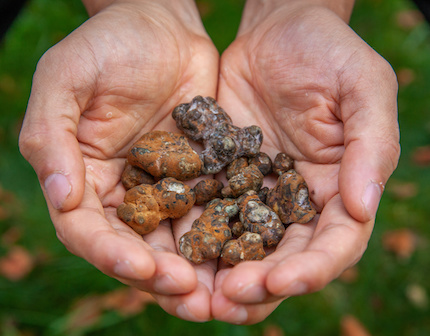
A subset of the UK biohacking community integrates microdosing fresh psilocybin truffles with adaptogen protocols. The rationale: psilocybin’s neuroplasticity-enhancing effects may synergize with lion’s mane’s NGF support, while ashwagandha mitigates any subtle anxiety some users experience on microdose days.
Typical integration: 0.5 grams of fresh truffles every third day (Fadiman protocol), with daily lion’s mane and ashwagandha in the evening. This is sometimes called the modified Stamets stack, though Paul Stamets’ original protocol used niacin, which many UK users omit due to uncomfortable flushing.
New to microdosing? Our step-by-step beginner’s guide covers fresh truffle dosing, protocols, and safety. The Starters Deal includes pre-dosed strips, a precision scale, and a complete guide for first-time microdosers.
Legal note: psilocybin truffles occupy a regulatory grey area in the UK. Possession and sale are illegal under the Misuse of Drugs Act 1971, though enforcement around personal microdosing remains inconsistent. Many UK users order from European suppliers where truffles are legal, though this carries import risk.
Where is the UK biohacking scene most active?
London dominates by volume, but Manchester, Bristol, Edinburgh, and Brighton host active communities. London biohackers skew finance and tech, with meetups in Shoreditch and co-working spaces in King’s Cross. Topics range from blood biomarker interpretation to peptide experimentation, with adaptogens as an entry point.
Manchester’s scene is younger and startup-focused. Monthly biohacking meetups at Federation House and working groups on Notion share protocols, supplier reviews, and n=1 experiments. The tone is pragmatic: what improves output, what’s measurable, what’s cost-effective.
Bristol and Brighton lean more holistic, blending biohacking with breathwork, cold exposure, and plant medicine integration. Edinburgh’s community, influenced by the university’s neuroscience programs, emphasizes mechanistic understanding and published research.
What does the evidence say about common adaptogen stacks?
Research on individual adaptogens is growing, but studies on combinations are limited. Here’s what we know:
Ashwagandha (KSM-66): Multiple RCTs show reduced cortisol (up to 27.9% reduction), improved stress scores, and better sleep quality at 600mg daily. Effects typically appear after 4-6 weeks.
Lion’s mane: Human trials show improved cognitive function in mild cognitive impairment (MCI) at 1000mg 3x daily. Mechanism involves hericenones and erinacines stimulating NGF synthesis. Effects on healthy adults are less studied but early data suggests benefits for focus and memory.
Cordyceps: Studies on athletic performance show improved VO2 max and time to exhaustion. Cognitive benefits are extrapolated from ATP enhancement but lack direct human trials.
Reishi and chaga: Strong preclinical data on immune modulation and antioxidant activity. Human trials are fewer and focus primarily on immune markers and quality of life in clinical populations.
For a deeper look at microdosing evidence, see what the research says about microdosing benefits.
What are the risks and considerations?
Adaptogens are generally well-tolerated, but individual responses vary. Key considerations:
- Thyroid interaction: Ashwagandha may increase thyroid hormone levels. Those with hyperthyroidism or on thyroid medication should consult a healthcare provider.
- Medication interactions: Reishi has mild anticoagulant properties. Ashwagandha may potentiate sedatives or immunosuppressants.
- Quality variance: Not all extracts are standardized. Look for third-party testing and specific compound concentrations (e.g., 5% withanolides in ashwagandha, 30% beta-glucans in mushroom extracts).
- Dosing precision: More is not better. Start at the lower end of studied ranges, especially when stacking multiple compounds.
Pregnant or breastfeeding individuals should avoid most adaptogens due to insufficient safety data. Those with autoimmune conditions should approach immune-modulating mushrooms cautiously and under medical guidance.
Frequently asked questions
Can you take lion’s mane and ashwagandha together?
Yes, many UK biohackers stack these daily. Lion’s mane supports focus and neuroplasticity, while ashwagandha reduces cortisol and stress. Take lion’s mane in the morning for cognitive benefit and ashwagandha in the evening to support sleep and recovery. No known negative interactions exist between these two adaptogens.
How long does it take for adaptogen stacks to work?
Most users notice subtle effects within 1-2 weeks, but measurable benefits typically emerge after 4-6 weeks of consistent use. Ashwagandha’s cortisol-lowering effects appear around week 4 in clinical trials. Lion’s mane cognitive benefits build gradually as NGF levels increase. Track subjective and objective markers to assess your individual response timeline.
Should you cycle adaptogens or take them continuously?
Cortisol-modulating adaptogens like ashwagandha and rhodiola benefit from cycling: 6-8 weeks on, 2-4 weeks off prevents receptor downregulation. Functional mushrooms (lion’s mane, reishi, chaga, cordyceps) are generally taken continuously without cycling. Magnesium and zinc are daily micronutrients that don’t require cycling unless addressing a specific deficiency.
Are adaptogen stacks safe to combine with microdosing?
There are no known contraindications between psilocybin microdosing and common adaptogens like lion’s mane, ashwagandha, or cordyceps. In fact, some users report synergistic effects, particularly lion’s mane with microdosing for enhanced neuroplasticity. Start each intervention separately to assess individual tolerance before combining. Our complete microdosing guide covers integration with other supplements.
Where can I buy quality adaptogens in the UK?
GO Microdose ships functional mushroom supplements and adaptogenic supplements across the UK and Europe. All products are third-party tested and use standardized extracts. For in-person shopping, Holland & Barrett and Boots stock basic options, though extract quality and standardization vary. Online retailers like Mushroom Revival and Oriveda offer premium mushroom extracts with full lab reports.
Do I need to take adaptogens with food?
Most adaptogens absorb well on an empty stomach, though some users experience mild nausea. Ashwagandha and zinc are best taken with food to prevent gastric discomfort. Lion’s mane, cordyceps, reishi, and chaga can be taken anytime. Fat-soluble compounds in some mushroom extracts may absorb better with a small amount of dietary fat, though the difference is typically marginal.
Conclusion
Adaptogens UK professionals use are chosen for measurable impact: stress regulation, cognitive clarity, sustained energy. The approach is methodical, evidence-aware, and personalized. Whether you’re stacking lion’s mane for focus, ashwagandha for stress resilience, or exploring microdosing with functional mushrooms, start with one variable, track your response, and adjust based on outcomes. Browse our full range of functional mushrooms and adaptogens to build your own protocol.