- Written on
- 8 min. reading time

When comparing electrolyte gummies vs sports drinks, the answer isn’t as simple as old versus new. Both formats deliver sodium, potassium, and other minerals your body loses through sweat, but they differ significantly in absorption speed, sugar content, and practicality. Gummies offer portability and controlled dosing without the liquid bulk, while traditional sports drinks provide faster hydration through combined water and electrolyte delivery. The best choice depends on your activity type, duration, and how you prefer to rehydrate.
What actually causes dehydration during exercise?
Dehydration during physical activity isn’t just about water loss. When you sweat, you lose both fluids and electrolytes, primarily sodium and chloride, with smaller amounts of potassium, magnesium, and calcium. Sodium plays a crucial role in fluid retention, which is why drinking plain water alone often isn’t enough during intense or prolonged exercise.
Your body needs electrolytes to maintain proper muscle function, nerve signalling, and fluid balance across cell membranes. When electrolyte levels drop too low, you can experience muscle cramps, fatigue, dizziness, and impaired performance, even if you’re drinking plenty of water. This is why targeted electrolyte replacement has become standard practice for anyone exercising for more than an hour or sweating heavily.
How do electrolyte gummies compare to sports drinks?
The core difference between electrolyte gummies vs sports drinks lies in their delivery format and how your body processes them. Sports drinks combine electrolytes with water, offering simultaneous hydration and mineral replacement. This makes them effective during activity when you need both fluid and electrolyte replenishment quickly.
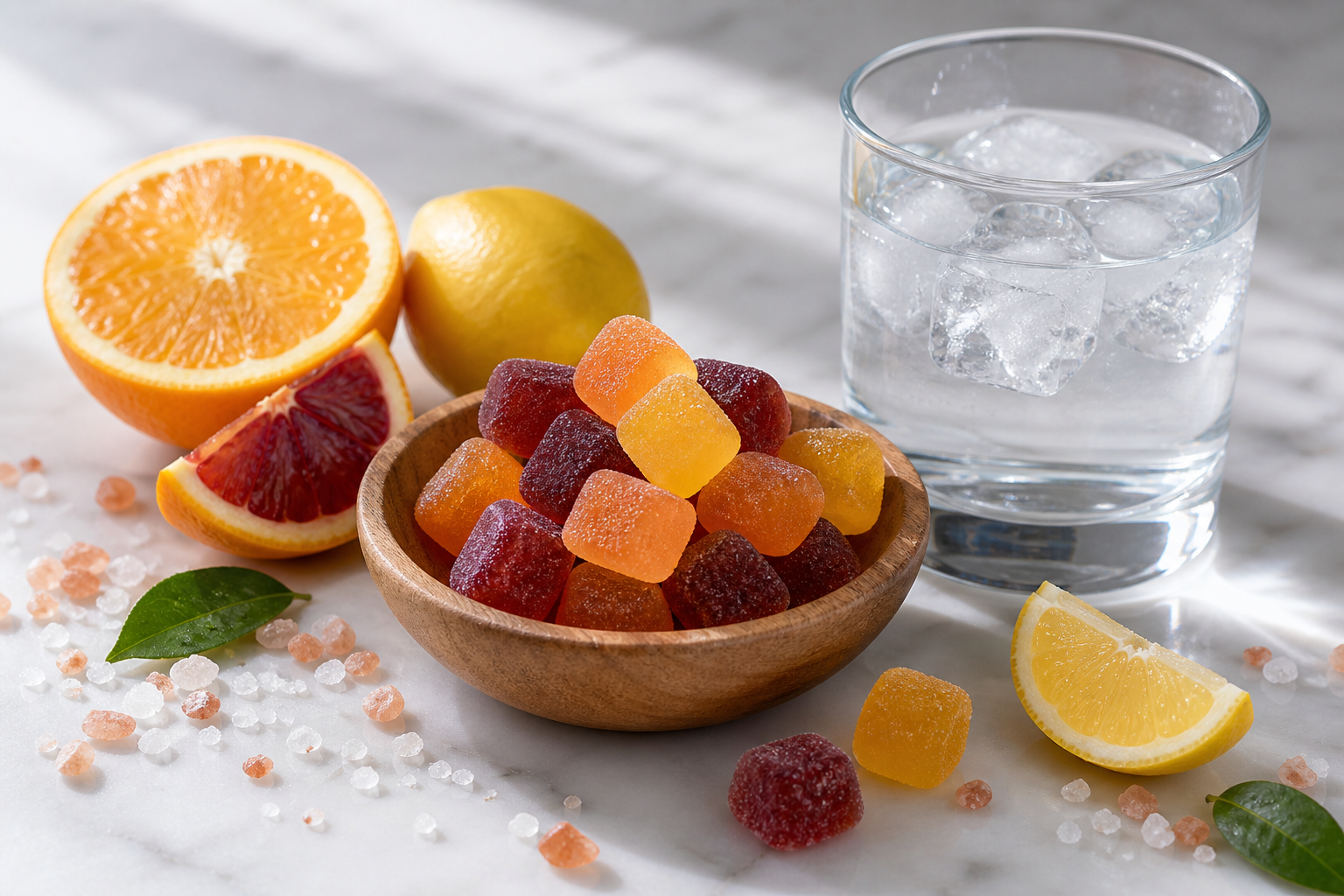
Electrolyte gummies, like our Electrolyte Gummies, separate the electrolyte dose from your water intake. You chew the gummy and drink water separately, which gives you more control over both mineral and fluid intake. This format works particularly well for activities where carrying liquid is impractical, such as long hikes, cycling, or gym sessions where you already have a water bottle.
Each GO Microdose electrolyte gummy delivers a precise blend of sodium, potassium, magnesium, and B vitamins in a portable, shelf-stable form. There’s no need for mixing powders or carrying bulky bottles, and you can adjust your intake based on actual need rather than committing to a full drink.
What's in a typical sports drink?
Traditional sports drinks were formulated in the 1960s and have changed surprisingly little. A standard 500ml bottle typically contains:
- 21-30g of sugar (usually glucose, fructose, or sucrose blends)
- 200-300mg of sodium
- 60-100mg of potassium
- Artificial colours and flavours
- Citric acid for taste
The high sugar content serves two purposes: it improves taste and provides quick energy through simple carbohydrates. During intense exercise lasting over 90 minutes, this glucose can help maintain performance. However, for shorter gym sessions or moderate activity, that sugar load is often unnecessary and can work against weight management goals.
The sodium-to-potassium ratio in most sports drinks is heavily skewed towards sodium because that’s the primary electrolyte lost in sweat. But the actual concentrations are often lower than what serious athletes need during prolonged exertion.
What's in electrolyte gummies?
Modern electrolyte gummies use a more refined approach. Our formulation contains:
- Sodium chloride and sodium citrate for fluid retention
- Potassium citrate for muscle and nerve function
- Magnesium citrate for muscle relaxation and recovery
- B vitamins (B3, B6, B12) for energy metabolism
- Natural fruit pectin base
- Minimal sugar (2-3g per serving)
The electrolyte concentrations are higher per serving compared to the equivalent volume of sports drink, and the addition of magnesium addresses a mineral often neglected in traditional formulas. Magnesium supports muscle relaxation and helps prevent the cramping that can occur with sodium and potassium replacement alone.
The B vitamin complex supports cellular energy production, which is particularly useful during endurance activity. Unlike the simple sugars in sports drinks, this approach supports sustained energy metabolism rather than quick glucose spikes.
Does absorption speed differ between formats?
Yes, and this is where context matters. Sports drinks offer faster initial absorption because the electrolytes are already dissolved in liquid. When you drink a sports drink, the sodium and glucose mixture triggers rapid fluid absorption in the small intestine through a process called sodium-glucose co-transport. This makes sports drinks effective during high-intensity activity when you need immediate rehydration.
Electrolyte gummies must first dissolve in your stomach before absorption begins, which adds 10-20 minutes to the process. However, if you’re drinking water alongside the gummies (which you should be), the practical difference becomes minimal. The gummy dissolves, the electrolytes enter your small intestine with the water you’re drinking, and absorption proceeds normally.
For pre-hydration or post-workout recovery, this timing difference is irrelevant. For mid-activity fuelling during intense efforts like racing or competitive sport, a liquid format might have a slight edge. For everything else, including gym sessions, recreational sports, hiking, or daily hydration support, gummies and drinks perform equivalently when consumed with adequate water.
When should you choose gummies over drinks?
Electrolyte gummies excel in situations where portability, shelf stability, and precise dosing matter:
- Long hikes or outdoor activities: No liquid weight to carry; just bring gummies and refill water from natural sources or a hydration pack
- Air travel: Gummies clear security and don’t count against liquid limits
- Gym sessions: Take one gummy before and after without committing to a full bottle of sugary drink
- Heat exposure: Gummies won’t spoil or leak in a hot car or backpack
- Controlled nutrition: You’re monitoring sugar and calorie intake but still need electrolyte support
You can browse our full range of performance and recovery support in the gummies section of our shop, including options for sleep, daily wellness, and hydration.
Can you combine different hydration strategies?
Absolutely, and many active people do. There’s no rule that says you must choose one format exclusively when weighing electrolyte gummies vs sports drinks. During long endurance events, some athletes use sports drinks for on-the-go fuelling and gummies for pre-loading or post-recovery. Others prefer gummies throughout and simply drink more water.
The key is matching electrolyte intake to sweat loss. If you’re exercising hard for more than an hour in hot conditions, you’ll need more sodium than someone doing a 30-minute yoga session. Most people benefit from 300-500mg of sodium per hour of intense exercise, along with proportional amounts of potassium and magnesium.
Listen to your body. Signs you need more electrolytes include persistent muscle cramps despite hydration, headaches after exercise, excessive fatigue, or drinking lots of water but still feeling thirsty. If you’re urinating clear and frequently but still feel off, you may be flushing electrolytes without replacing them, a condition called hyponatremia.
What about sugar content and calories?
This is where gummies pull ahead for most casual exercisers. A typical 500ml sports drink contains 100-120 calories, almost entirely from sugar. If you’re doing light to moderate exercise for weight management or general fitness, those calories can undermine your goals. Drinking two bottles during a gym session adds 200-240 calories, roughly equivalent to the calorie burn from 20-30 minutes of moderate cardio.
Electrolyte gummies typically contain 10-15 calories per serving from minimal added sugars and the pectin base. You get the electrolyte support without the caloric load, making them suitable for fasted training, low-carb diets, or anyone watching their sugar intake.
That said, the sugar in sports drinks isn’t inherently bad. If you’re running a marathon, cycling for hours, or doing genuinely intense prolonged activity, those fast-acting carbohydrates serve a legitimate purpose for performance and recovery. It’s about context and need, not blanket rules.
Frequently asked questions
Do electrolyte gummies work as well as sports drinks for hydration?
Yes, when consumed with adequate water. Electrolyte gummies provide the same minerals as sports drinks, just in a concentrated, portable form. The key is drinking enough water alongside them. The gummy delivers the sodium, potassium, and magnesium; the water you drink provides the fluid. Together, they achieve the same rehydration effect as a premixed sports drink.
How many electrolyte gummies should I take during a workout?
For most gym sessions (60-90 minutes), one to two gummies with 500ml of water is sufficient. For longer endurance activities or hot conditions where you’re sweating heavily, take one gummy per hour of activity along with regular water intake. Adjust based on sweat rate, thirst, and how you feel. Signs you need more include muscle cramps, persistent thirst despite drinking water, or fatigue that seems disproportionate to effort.
Can I take electrolyte gummies if I’m not exercising?
Yes. Electrolyte gummies are useful anytime you need mineral support: during hot weather, after illness with vomiting or diarrhoea, during long flights, or if you follow a very low-sodium diet. They’re also helpful for people who struggle to drink enough water throughout the day, as the sodium helps your body retain the fluids you do consume. Just pair them with water and adjust intake to your actual needs.
Are sports drinks better than electrolyte gummies for intense workouts?
For very high-intensity efforts where you need immediate glucose and rapid hydration (such as competitive racing or training sessions over 90 minutes), sports drinks may offer a slight advantage in speed of delivery. For everything else, including strength training, moderate cardio, recreational sports, and general fitness, electrolyte gummies perform just as well and offer better control over sugar and calorie intake. Many serious athletes now use both formats strategically depending on the specific training session.
Do electrolyte gummies need to be refrigerated?
No. Unlike sports drinks, which can spoil once opened or lose carbonation, electrolyte gummies are shelf-stable at room temperature. Store them in their original container in a cool, dry place. This makes them far more practical for travel, keeping in a gym bag, or storing in a car without worry about spoilage or leaking.
The practical choice for active lifestyles
When weighing electrolyte gummies vs sports drinks, consider your actual needs rather than marketing claims. Both formats deliver essential minerals for hydration and performance. Gummies offer portability, lower sugar content, and precise control, while sports drinks provide convenience for those who prefer an all-in-one liquid solution. For most active adults and gym-goers, electrolyte gummies represent a cleaner, more flexible approach to staying hydrated and performing at your best.