- Written on Modified on
- 7 min. reading time
If you’re considering your first truffle trip in a natural setting, you’re thinking along the right lines. Nature provides a comfortable, stimulating environment for many people exploring psilocybin for the first time at recreational doses. But turning that idea into a safe, legal, and genuinely pleasant experience requires some practical planning, especially if you’re travelling from the UK or elsewhere in Europe.
This guide walks through the key decisions: how to get to the Netherlands legally with truffles, what kind of natural setting works best, how to account for European weather, and what safety measures matter most when you’re several hours into a trip with nobody around but trees.
Understanding the legal landscape
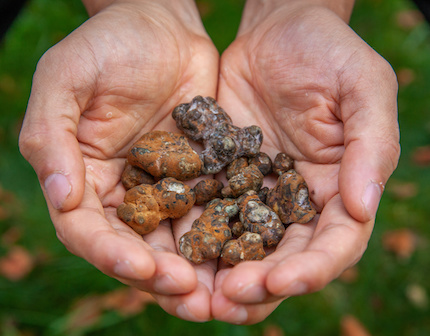
Psilocybin truffles are legal to purchase and consume in the Netherlands. They’re sold in smartshops and online, including through our full range of truffle products in varying strengths. Psilocybin mushrooms were banned in 2008, but truffles, which are technically sclerotia (the underground part of the same fungus), remain legal.
The complication comes when you leave the Netherlands. Psilocybin is controlled in the UK under the Misuse of Drugs Act, and it’s similarly restricted across most EU countries. Travelling internationally with truffles puts you at legal risk, regardless of where you bought them. For this reason, the safest approach is to plan your experience within the Netherlands and not attempt to bring truffles across borders.
This might sound limiting, but the Netherlands offers plenty of natural spaces within easy reach of major cities. You’re not restricted to Amsterdam’s busy parks.
Choosing your natural setting
Not all natural settings are equal when you’re navigating an altered state for several hours. Here’s what to consider:
Privacy matters more than you think. Popular hiking trails, busy beaches, and tourist-heavy parks can feel overwhelming during a trip. Unexpected encounters with dog walkers, cyclists, or families can spike anxiety, especially if you’re not experienced with managing your headspace in public. Look for locations that see lighter foot traffic, particularly on weekdays.
Accessibility is a practical concern. You want a location close enough to reach easily, but remote enough to feel private. Spots requiring long hikes to reach might sound appealing, but consider that you’ll need to walk back out later, potentially while still feeling effects. A 20-minute walk from a car park or train station is often ideal.
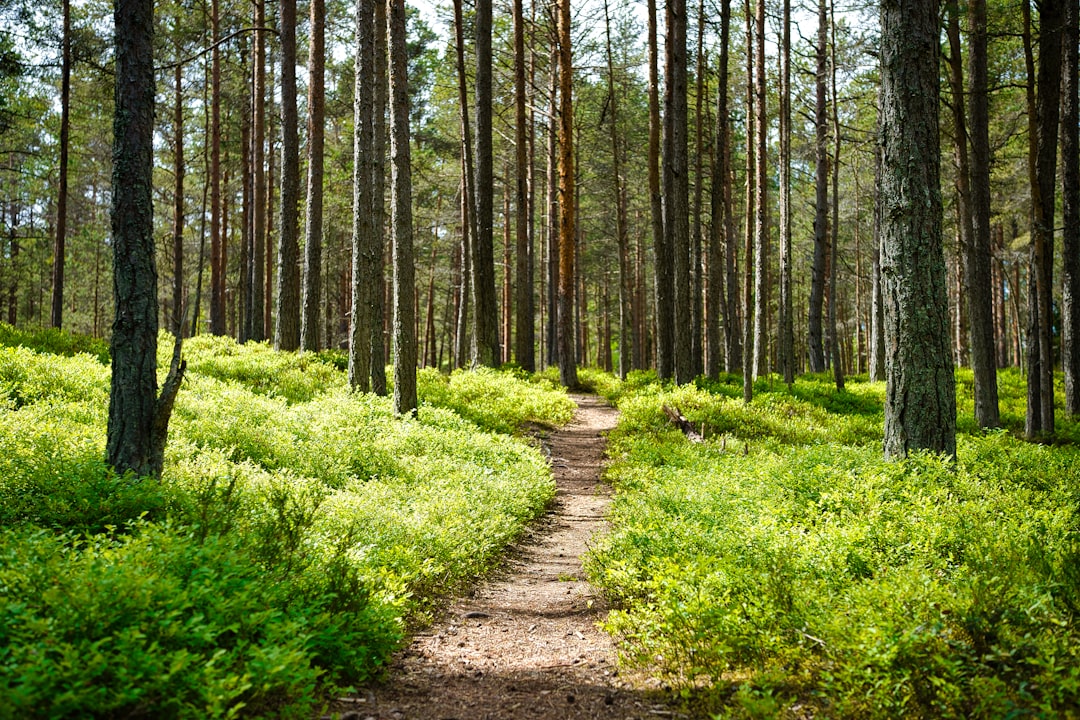
Terrain and comfort are underrated factors. Flat, open woodland with clear paths is easier to navigate than dense forest or rugged hills. You want a place where you can sit comfortably for extended periods. Bring a blanket or tarp, the ground is colder and damper than it looks, even in summer.
Some well-regarded areas in the Netherlands for this purpose include the Veluwe region (large forests, relatively quiet), dune areas along the coast near Zandvoort or Schoorl (open, scenic, but check wind forecasts), and the Utrechtse Heuvelrug (rolling forests, good path networks). Avoid the Wadden Islands unless you’re comfortable with unpredictable weather and limited quick exit options.
Weather planning for northern Europe
Northern European weather is famously unreliable, and being cold or wet during a trip can shift the entire experience from pleasant to miserable. A few degrees and some drizzle that you’d normally ignore can feel much more significant when your sensory perception is heightened.
Aim for stable conditions. Check the forecast for at least three days beforehand and look for settled weather patterns, not just a optimistic prediction for your specific day. Spring and early autumn can be beautiful but bring rapid weather changes. Late May through September generally offers the most reliable conditions.
Temperature comfort range is narrower than usual. Pack layers you can adjust easily. Even if it’s forecast for 18°C, bring a warm fleece or jacket. Your body temperature regulation may feel different, and sitting still for long periods will cool you down faster than you expect.
Rain is a trip-ender for most people. Light mist might be tolerable, but sustained rain is unpleasant and potentially unsafe (hypothermia risk is real if you’re wet and stationary). Have a backup plan: either a postponement strategy or a sheltered location you can move to. A car parked nearby provides emergency shelter but isn’t ideal as a primary location.
Safety essentials and the sober companion question
A sober trip sitter, someone who stays completely sober to monitor your wellbeing and help if needed, is the gold standard safety recommendation for first-time users at recreational doses. This is particularly true in nature, where you’re further from immediate help.
That person doesn’t need to hover or entertain you. Their job is to stay grounded, keep track of time, ensure you stay hydrated, and provide reassurance if the experience becomes difficult. They should know your planned dose (our complete guide covers dosing considerations even beyond microdosing ranges), have a charged phone, and know the basics of psychological support during challenging moments (mostly: calm presence, reminders that the feeling is temporary, gentle distraction if needed).
Some people choose to trip with a friend who’s also taking truffles, rather than having a sober sitter. This carries more risk, as neither person can provide fully grounded support if things go sideways. If you take this route, both people should take modest doses, and at least one should have prior experience.
Practical safety kit: Fully charged phone with emergency numbers saved, sufficient water (more than you think, at least 1.5 litres per person), simple snacks (fruit, nuts, nothing requiring preparation), basic first aid supplies, a whistle (cheap, effective if you need to signal for help), and a written note with your planned location and return time left with someone not present.
Timing and logistics
Psilocybin truffle effects typically begin 30 to 60 minutes after consumption, peak around 2 to 3 hours in, and taper off over 4 to 6 hours total. Individual variation is significant, but plan for a full 6-hour window from consumption to feeling reasonably baseline.
Arrive early. Get to your location, settle in, and take your truffles with enough daylight remaining to cover the peak and comedown. Starting at 10 or 11 AM gives you the full afternoon and avoids the anxiety of approaching darkness while still navigating effects. Sunset during a trip can be beautiful, but navigating an unfamiliar forest path in twilight while not quite baseline is stressful.
Transport planning is non-negotiable. Do not drive after taking truffles. Even if you feel fine, your reaction times and judgment are impaired. If you’ve driven to a trailhead, your sober companion drives back. If they’re not there, plan to stay until you’re completely certain you’ve returned to baseline, which may mean waiting several hours beyond when effects seem to fade. Public transport is a safer option: trains back to Amsterdam or other cities run frequently, though the environment may feel intense.
Have a plan for accommodation. Booking a nearby hotel or Airbnb for the night removes time pressure and lets you rest properly after the experience. Trying to rush back to catch a flight or ferry the same evening is asking for stress.
What to actually do out there
People often over-plan activities for a truffle trip. The experience itself provides plenty of mental content. Simple, open-ended activities work best: walking slowly, sitting and observing, listening to the environment, looking closely at natural textures and patterns.
Bring a journal or sketchpad if you’re inclined, but don’t expect to produce masterpieces. Music through headphones can be profound for some people and distracting for others; if you bring it, make it a choice rather than a default. Avoid complex tasks, navigation challenges, or anything requiring clear decision-making.
The aim is to be present, safe, and comfortable. Everything else is optional.
Final thoughts
A first truffle trip in nature can be a powerful, memorable experience when conditions align: good weather, a thoughtfully chosen location, proper preparation, and ideally a sober companion who takes the safety role seriously. The planning might feel extensive, but each element addresses a real risk or comfort factor that matters more in an altered state than in ordinary circumstances.
Respect the legal boundaries, take the weather seriously, and don’t underestimate the value of a simple, accessible location over a remote epic setting. The truffles will provide the profundity. Your job is just to set up conditions where you can experience it safely.