- Written on Modified on
- 7 min. reading time

If your growkit not fruiting is causing frustration, you’re not alone. Most fruiting delays come down to four key factors: humidity, temperature, light, or contamination. The good news is that most stalled kits can be rescued with simple adjustments. This guide walks you through a practical troubleshooting checklist to identify what’s wrong and get your mushroom growkit back on track.
Why mushroom growkits stall
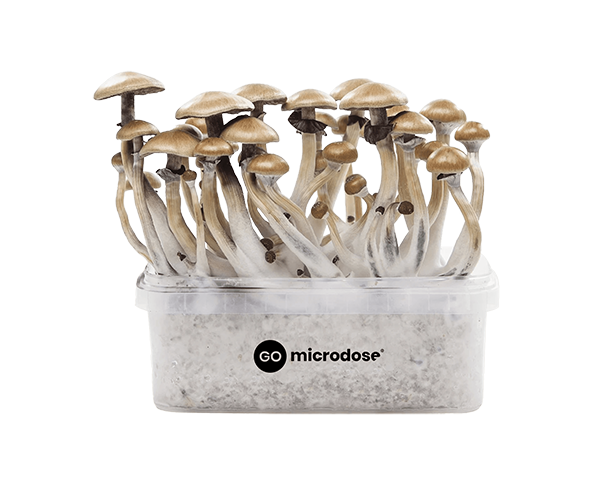
Mushroom growkits are designed to fruit easily, but they rely on specific environmental triggers. When conditions aren’t quite right, the mycelium goes dormant or grows slowly without producing pins. Understanding what mushrooms need helps you diagnose the issue quickly.
Psilocybe cubensis and other common growkit species need high humidity, indirect light, fresh air exchange, and stable temperature. If any of these fall outside the ideal range for more than a few days, fruiting slows or stops entirely. The mycelium itself is usually healthy, it’s just waiting for the right signal.
Is your humidity high enough?
Low humidity is the most common reason for a growkit not fruiting. Psilocybe cubensis needs 90-95% relative humidity during fruiting. If the air is too dry, pins won’t form and existing pins may abort or dry out.
How to check: Look for condensation on the inside of your growbag or fruiting chamber walls. If the surface looks dry or there’s no visible moisture, humidity is likely too low.
How to fix it:
- Mist the inside of the bag or chamber walls 2-3 times daily with clean water, never spray the substrate directly
- Keep the growbag sealed except when fanning for air exchange
- Place a damp cloth or small container of water inside the fruiting chamber to maintain ambient moisture
- If you’re using a shotgun fruiting chamber, add wet perlite to the base layer
Within 3-5 days of raising humidity, you should see the substrate surface darken slightly and pins begin to emerge.
Check your temperature range
Temperature outside the ideal range can delay or completely halt fruiting. Psilocybe cubensis fruits best between 20-24°C. Below 18°C, growth slows dramatically. Above 28°C, the mycelium can stall or become vulnerable to contamination.
How to check: Use a simple thermometer inside or near your fruiting chamber. Check morning and evening, as room temperature fluctuates.
How to fix it:
- Move your growkit to a warmer or cooler spot in your home, avoid windowsills with direct sun or cold drafts
- If your room is consistently cool, place the kit on a heat mat set to low, but monitor temperature closely to avoid overheating
- In hot climates, move the kit to the coolest room or use a fan to improve air circulation without drying out the substrate
Stable temperature is more important than hitting the exact ideal. Avoid swings of more than 3-4°C within a 24-hour period.
Are you giving it enough light?
Mushrooms don’t photosynthesize, but they do need light as a directional cue to trigger pinning and guide upward growth. A growkit kept in complete darkness often won’t fruit, even if all other conditions are perfect.
How to check: Your growkit should receive indirect natural light or low artificial light for at least 8-12 hours per day. It doesn’t need to be bright, just enough to read by.
How to fix it:
- Place the kit near a window with indirect light, never in direct sunlight which raises temperature and dries out the substrate
- Use a low-wattage LED or fluorescent bulb on a 12-hour timer if natural light isn’t available
- Avoid placing the kit in cupboards, dark corners, or rooms without windows
Light doesn’t need to be intense. A north-facing window or ambient room light is usually sufficient.
Look for signs of contamination
Contamination competes with your mycelium for nutrients and can halt fruiting entirely. Common contaminants include green or black mold, bacterial slime, and cobweb mold.
How to check: Healthy mycelium is bright white and fluffy or rope-like. Contamination often appears as green, grey, black, yellow, or pink patches, or as a slimy wet texture with a sour smell.
What to do:
- Small contamination spots can sometimes be isolated by cutting away the affected area with a sterile knife and increasing fresh air exchange
- If contamination covers more than 20-30% of the surface, the kit is usually too far gone to rescue
- Prevention is key: always mist with clean water, avoid touching the substrate, and don’t open the growbag in dusty or dirty environments
If you’re unsure whether discoloration is contamination or bruising, wait 24-48 hours. Bruising stays the same or fades slightly, mold spreads and becomes more vibrant.
Fresh air exchange matters too
Mushrooms release CO2 as they grow. Without fresh air exchange, CO2 builds up and pins either won’t form or grow into long, thin stems with tiny caps. This is especially common in fully sealed environments.
How to fix it:
- Fan the growbag or fruiting chamber gently 2-3 times per day for 30-60 seconds
- If using a growbag, open it briefly after misting to allow CO2 to escape
- Don’t place the kit in an airtight cupboard or sealed box without ventilation holes
Fanning also helps regulate humidity and temperature, so it serves multiple purposes in your daily routine.
When to try a cold shock
If your growkit has stalled for more than 10-14 days and all conditions seem correct, a cold shock can sometimes trigger pinning. This mimics the temperature drop mushrooms experience in nature before a fruiting cycle.
How to do it: Place the entire growkit in the refrigerator for 12-24 hours, then return it to normal fruiting conditions. This temperature shock can prompt the mycelium to initiate pins within 3-7 days.
Only try this if the substrate still looks healthy and white. Don’t cold shock contaminated or dried-out kits, it won’t help and may make things worse.
Patience and observation
Sometimes a growkit not fruiting simply needs more time. Mycelium colonization and pinning can take 7-21 days depending on the kit’s age, strain, and storage conditions before you started it.
Check your kit daily but avoid obsessing over it. Make one or two adjustments at a time, then wait 3-5 days to see results. Changing too many variables at once makes it hard to know what actually worked.
If you’re new to growing, explore our full range of growkits and mushroom products to find the best fit for your experience level and setup.
Frequently asked questions
How long should I wait before assuming my growkit won’t fruit?
If you’ve followed all instructions and conditions are correct, give it 14-21 days from when you started the kit. If there’s no sign of pins or surface mycelium activity after three weeks, review the checklist again or consider the kit may have been damaged during storage or shipping.
Can I still eat mushrooms from a kit that had minor contamination?
If contamination was isolated and removed early, and the mushrooms themselves look and smell normal, they’re usually safe. However, if mold was widespread or the mushrooms have an off smell or slimy texture, discard them. When in doubt, don’t consume.
Why are my pins growing but then aborting?
Pin abort usually happens due to sudden drops in humidity, inconsistent misting, or lack of fresh air exchange. Aborted pins turn dark and stop growing. Increase humidity, mist more consistently, and improve airflow to prevent future aborts.
Should I remove aborted pins from the substrate?
Yes, gently twist and pull them off. Aborted pins can rot and attract contamination if left on the surface. Removing them also encourages the kit to focus energy on new, healthy pins.
Can I reuse a growkit after the first flush?
Absolutely. After harvesting, soak the kit in clean water for 12-24 hours to rehydrate the substrate, then drain and return it to fruiting conditions. Most kits produce 2-4 flushes, though each flush is typically smaller than the last.
What if my growkit surface looks dried out and cracked?
Gently mist the surface directly with clean water 3-4 times over the course of a day to rehydrate it, then resume normal humidity maintenance. Cracks indicate severe drying, which can delay or prevent fruiting, but the mycelium underneath is often still viable.
Get your growkit back on track
A growkit not fruiting is frustrating, but most kits can be rescued with attention to humidity, temperature, light, and contamination prevention. Work through this checklist methodically, make one or two changes at a time, and give your mycelium the stable conditions it needs to fruit. For more mushroom growing tips and high-quality kits, visit our full shop selection.