- Written on Modified on
- 7 min. reading time

The short answer: microdosing and meditation appear to work synergistically, though controlled research is still limited. Both practices quiet the default mode network, the brain’s self-referential narrative centre. Practitioners consistently report deeper focus, easier access to present-moment awareness, and reduced mental resistance during meditation sessions. Neuroscience suggests these tools may amplify each other’s effects by targeting overlapping neural pathways involved in self-awareness and attention regulation.
What practitioners say about combining microdosing and meditation

Long-time meditators who incorporate microdosing often describe a sense of ‘softening’ around habitual mental patterns. The inner critic quiets. The tendency to judge thoughts or label experiences as good or bad diminishes. Sessions feel less effortful, more spacious.
One common observation: microdosing doesn’t create meditative states, but it can lower the barrier to accessing them. The busy mind doesn’t vanish, but there’s more room between thoughts. This aligns with what many people report from their first microdosing experiences: subtle shifts in perspective rather than dramatic alterations.
Some practitioners notice enhanced bodily awareness. Breath feels more vivid. Sensations arise with greater clarity. For body-scan or somatic meditation practices, this heightened interoceptive sensitivity can deepen the experience considerably.
Others describe microdosing as a ‘reset button’ for stale meditation routines. After months or years of practice, sessions can become mechanical. A microdose day occasionally reintroduces a sense of curiosity and openness that reignites engagement with the practice itself.
How does the default mode network connect microdosing and meditation?
The default mode network (DMN) is a collection of brain regions active when we’re not focused on external tasks. It’s responsible for mind-wandering, autobiographical memory, self-referential thinking, and planning. Overactivity in the DMN is linked to rumination, anxiety, and the sense of being trapped in thought loops.
Both psilocybin and meditation have been shown to reduce DMN activity. Neuroimaging studies reveal that even sub-perceptual doses of psilocybin decrease connectivity within the DMN, particularly in the posterior cingulate cortex and medial prefrontal cortex. These are the same regions that quiet during focused meditation and mindfulness practices.
This overlap suggests a shared mechanism: both tools help loosen the brain’s default habit of constructing and maintaining a rigid sense of self. When the DMN quiets, the mental narrative softens. There’s less identification with thoughts and more capacity to observe them without attachment.
Importantly, this isn’t about eliminating the self or achieving ego death at microdose levels. It’s a gentler recalibration that can make meditative awareness feel more accessible and sustained throughout the day.
What does neuroscience research say about this combination?
Direct research on microdosing combined with meditation is scarce, but adjacent evidence is growing. Studies on full-dose psilocybin combined with meditation retreats show measurable improvements in emotional regulation, openness, and well-being that persist months later. These effects appear stronger than either intervention alone.
One 2019 study found that psilocybin increased mindfulness-related capacities such as non-judgment and present-moment awareness. Participants who meditated regularly before taking psilocybin reported easier access to these states post-session. The implication: an established meditation practice may create fertile ground for psilocybin’s effects, even at microdose levels.
Neuroplasticity offers another angle. Both meditation and psilocybin appear to enhance synaptic plasticity, the brain’s ability to form new connections. Meditation strengthens attention networks over time. Psilocybin, even in small amounts, may temporarily increase brain-derived neurotrophic factor (BDNF), which supports neuronal growth. Together, they might create conditions for lasting shifts in attention and emotional patterns.
It’s worth noting that much of this is still theoretical extrapolation from higher-dose studies. Controlled trials specifically examining microdosing and meditation are needed, but the mechanistic overlap is compelling.
How to combine microdosing and meditation practically
If you’re considering this combination, a thoughtful approach matters. Start by establishing a baseline meditation practice first. Even 10 minutes daily for a few weeks gives you a reference point to notice any shifts once you introduce microdosing.
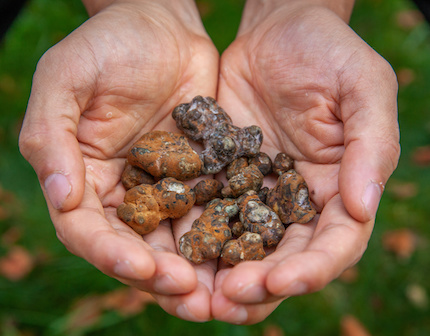
On microdose days, many people find it helpful to meditate within the first 90 minutes after taking their dose, when effects are most noticeable. A typical fresh truffle microdose is around 0.5 grams, though individual sensitivity varies between 0.3 and 0.7 grams. Our dosage calculator can help you find your range if you’re new to this.
Some practitioners prefer to meditate before dosing, using the session as a ritual anchor for the day. Others integrate short mindfulness check-ins throughout a microdose day rather than one long sit. Experiment to find what feels most supportive.
Keep a simple journal noting meditation quality, emotional tone, and any patterns over weeks. This helps you track whether the combination genuinely enhances your practice or if expectations are colouring your experience.
What meditation styles pair well with microdosing?
Most meditation styles can pair effectively with microdosing, but certain approaches seem particularly complementary based on practitioner feedback.
Mindfulness and breath-focused practices benefit from the enhanced present-moment awareness many people experience on microdose days. Attention feels less sticky, easier to redirect gently when it wanders.
Body-scan and somatic meditation often feel more vivid. Subtle sensations become clearer. This can deepen practices like yoga nidra or progressive muscle relaxation.
Open-awareness or choiceless awareness meditation aligns well with the expanded perspective microdosing can bring. The practice of simply noticing whatever arises without focusing on a single object feels more natural when mental rigidity softens.
Loving-kindness (metta) meditation is another strong pairing. Some practitioners report easier access to compassionate feelings toward themselves and others on microdose days, though this varies individually.
Highly concentrative practices like kasina or intense single-pointed focus may feel different. Some find them easier; others notice more mental movement than usual. There’s no universal rule, only your direct experience.
Are there any risks or considerations?
This combination is generally well-tolerated, but it’s not without considerations. If meditation already brings up difficult emotions or unprocessed material, microdosing may intensify that process. This isn’t necessarily harmful, but it can be uncomfortable without proper support.
People with a history of psychosis, mania, or severe mental health conditions should approach both practices cautiously and ideally under professional guidance. The same applies if you’re taking psychiatric medications, particularly SSRIs, which can interact with psilocybin.
Avoid turning this into a performance-chasing exercise. The goal isn’t to achieve ‘better’ meditation states or spiritual experiences. When expectation becomes too strong, both practices lose their grounding quality. Approach with curiosity rather than agenda.
Finally, microdosing shouldn’t replace an established meditation practice or become a crutch for accessing calm. The most sustainable benefits come from treating it as an occasional adjunct, not a daily requirement. Many practitioners microdose once or twice weekly while maintaining daily meditation independent of dosing days.
Frequently asked questions
Should I meditate before or after taking a microdose?
Both approaches work. Many people prefer meditating 60 to 90 minutes after taking their dose, when subtle effects are present. Others meditate first as a grounding ritual. Experiment with both to see what feels most supportive for your practice.
How much fresh truffle should I take if I’m combining it with meditation?
Start with around 0.5 grams of fresh psilocybin truffles, the typical microdose range. Some people find 0.3 grams sufficient, especially when paired with meditation. You can adjust based on your sensitivity, but avoid going higher than 0.7 grams if the intention is truly microdosing rather than a mini-dose.
Will microdosing make me better at meditation faster?
Microdosing isn’t a shortcut to meditative skill. It may temporarily make certain states more accessible, but lasting benefits come from consistent practice over time. Think of it as occasionally clearing obstacles rather than building the capacity itself.
Can I do intensive meditation retreats while microdosing?
Most retreat centres prohibit substances, and for good reason. Intensive practice in a structured container works differently than home practice. Introducing microdosing into a silent retreat without proper context or teacher awareness is generally not advisable. Keep them as separate practices unless you’re in a specifically designed program.
How often should I combine microdosing and meditation?
There’s no fixed rule, but once or twice per week is common among practitioners who integrate both. Daily microdosing isn’t typically recommended due to tolerance build-up. Maintain your daily meditation practice independent of dosing days for the most balanced approach.
Does the type of meditation tradition matter?
Not especially. Mindfulness, Zen, Vipassana, Tibetan practices, and secular meditation approaches can all pair well with microdosing. What matters more is your established familiarity with the practice and your intention. Deep traditional training isn’t required, but some baseline experience helps you notice the nuances.
Final thoughts on microdosing and meditation
The relationship between microdosing and meditation is one of mutual support rather than dependency. Both practices offer pathways to greater awareness, emotional flexibility, and presence. When approached with care, they can deepen each other in subtle but meaningful ways. If you’re curious to explore this combination, consider starting with our complete microdosing guide and a simple daily meditation practice, then observe what unfolds with patient attention.