- Written on Modified on
- 5 min. reading time

If you’ve been microdosing psilocybin truffles for a while, you might have noticed something curious: the same dose that feels perfectly subtle one week can feel surprisingly strong the next. Or perhaps ineffective. For women, one explanation is increasingly coming into focus, the menstrual cycle itself may influence how your body and brain respond to psilocybin.
While research on this interaction remains limited, anecdotal reports from women who microdose suggest that hormonal fluctuations throughout the cycle can alter sensitivity to psychedelics. Understanding these patterns can help you adjust your practice for more consistent, comfortable results.
Why hormones might influence psilocybin sensitivity
Psilocybin acts primarily on serotonin receptors in the brain, particularly the 5-HT2A receptor. What many people don’t realize is that estrogen and serotonin systems are closely intertwined. Estrogen influences serotonin synthesis, receptor density, and how effectively serotonin is transported and broken down.
During the follicular phase (from menstruation to ovulation), estrogen levels rise steadily. This tends to increase serotonin availability and receptor sensitivity. Progesterone, which dominates the luteal phase (from ovulation to menstruation), has a different effect. It metabolizes into compounds that act on GABA receptors, promoting calm but potentially dampening the serotonin system’s responsiveness.
The implication? Your brain’s neurochemical landscape shifts throughout the month, and substances that interact with serotonin, including psilocybin, may produce noticeably different effects depending on where you are in your cycle.
What women report across cycle phases
Anecdotal accounts from women in microdosing communities describe a few common patterns:
Follicular phase and ovulation (days 1-14 approximately): Many women report increased sensitivity to their usual dose during this phase, particularly around ovulation when estrogen peaks. The same 0.5g of truffles that felt barely noticeable during the luteal phase might produce more pronounced effects: sharper focus, brighter mood, or occasionally feeling slightly overstimulated. Some women intentionally reduce their dose by 20-30% during this window.
Luteal phase (days 15-28 approximately): As progesterone rises and estrogen drops, women commonly describe needing a slightly higher dose to achieve the same subjective effects. The experience may feel more grounded or muted. For those using microdosing to manage mood, this is also when PMS symptoms might interact with the practice, sometimes beneficially, sometimes complicating the picture.
Menstruation: Experiences vary widely here. Some women pause microdosing during their period, while others find it helpful for managing discomfort or low mood. Sensitivity can be unpredictable as both estrogen and progesterone are at their lowest.
These patterns are far from universal. Individual hormone levels, use of hormonal contraception, perimenopause, and personal neurochemistry all add layers of complexity.
Practical adjustments for cycle-aware microdosing
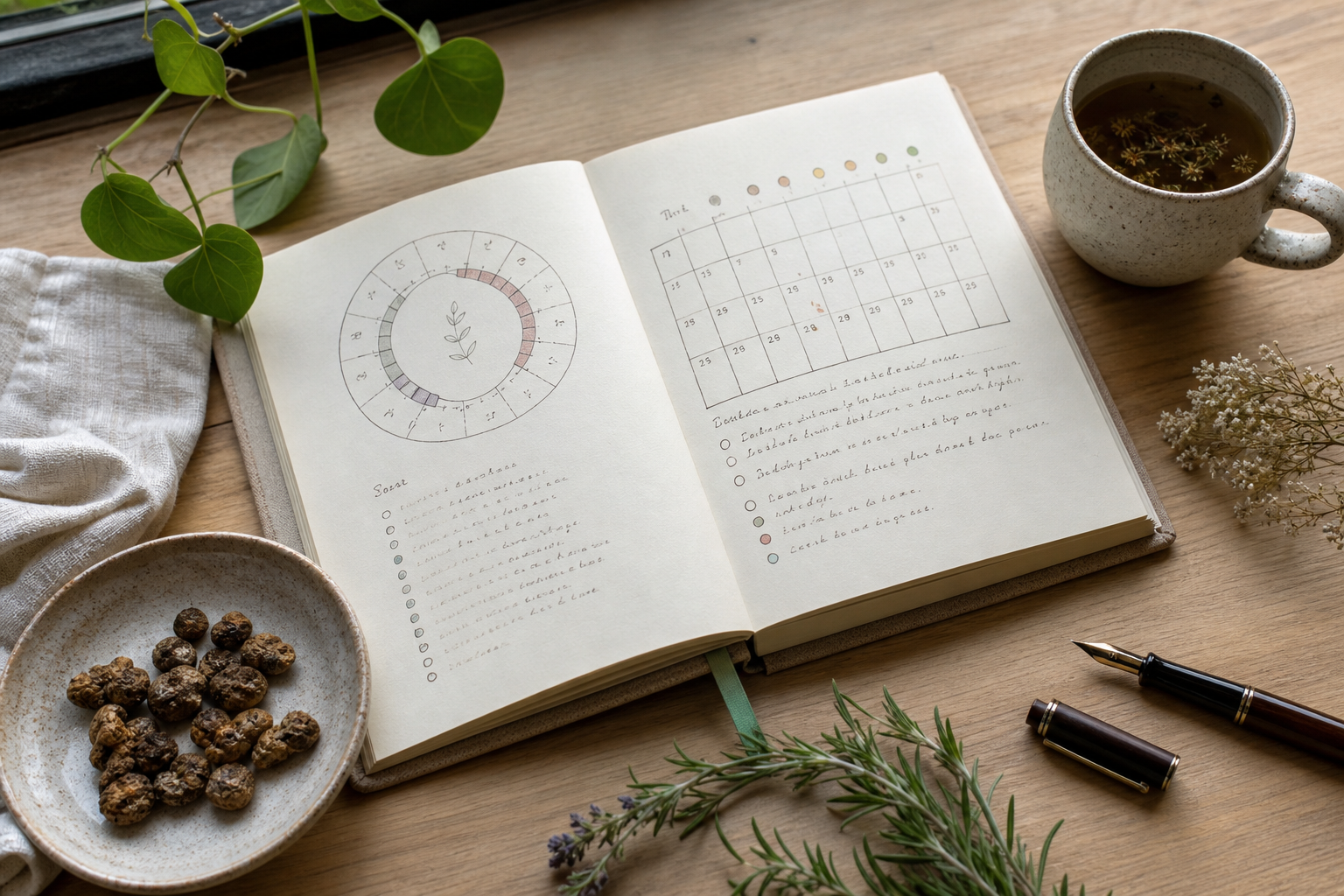
If you suspect your cycle is influencing your microdosing experience, tracking is your most valuable tool. Keep a simple log noting the date, where you are in your cycle, your dose, and how you felt. After two or three months, patterns often become clear.
Based on what you observe, you might choose to:
Adjust your dose by phase: Some women reduce their dose by 0.1-0.2g during the follicular phase and ovulation, then return to their baseline during the luteal phase. Others keep the dose constant but adjust frequency, skipping days when sensitivity feels higher. Our dosage calculator can help you find a personalized starting range that you can then fine-tune based on your cycle observations.
Modify your protocol timing: If you follow a structured schedule like the Fadiman protocol (one day on, two days off), consider how that rhythm aligns with your cycle. You might intentionally time your dosing days to avoid the highest-sensitivity window if you find it uncomfortable, or embrace it if you’re seeking deeper introspection.
Pause when needed: There’s no rule that says you must dose consistently throughout the month. Some women find the premenstrual week emotionally intense and prefer to pause, while others find microdosing particularly helpful then. Listen to your body rather than adhering rigidly to a schedule.
Hormonal contraception and other considerations
If you use hormonal birth control, your experience will differ. Combined pills, patches, and rings keep estrogen and progestin relatively stable, which may result in more consistent microdosing effects throughout the month (though the placebo week can still create fluctuations). Progestin-only methods, IUDs, and implants create their own hormonal patterns.
Perimenopause introduces another layer of complexity, as hormone levels can swing unpredictably. Women in this transition often report needing more flexibility in their microdosing practice, with greater variability week to week.
For anyone new to this practice, our complete microdosing guide provides comprehensive information on protocols, dosing principles, and what to expect when you’re just getting started.
The research gap and what we actually know
It’s important to be honest about what’s established versus what’s anecdotal. No published studies have specifically examined how the menstrual cycle affects psilocybin response. The reports we have come from online communities, personal experimentation, and the observations of practitioners working with clients.
We do know that research on other psychedelics, particularly MDMA and LSD, has found sex-based differences in subjective effects and pharmacokinetics. We also know estrogen’s influence on serotonin is well-documented in neuroscience literature. The interaction seems biologically plausible, but we’re connecting dots rather than citing definitive studies.
This doesn’t make women’s reported experiences invalid, it simply means we’re in the early stages of understanding a complex interaction. Your own careful observation is a legitimate source of knowledge about your body.
Starting your cycle-aware practice
If you’re considering microdosing with cycle awareness, start simple. Begin with a standard starting dose (typically 0.5-1g of truffles for microdosing), and track your experiences for at least two full cycles before making adjustments. Notice not just intensity, but quality: does the experience feel different in character at different times of the month?
For those just beginning their microdosing journey, a starter pack provides everything you need to begin experimenting safely and methodically, with enough truffles to explore different doses across your cycle.
Remember that consistency isn’t the only goal. Some women find that working with the natural variation rather than trying to flatten it out creates a richer, more intuitive practice. The creative, outward-focused energy of the follicular phase might call for different intentions than the introspective, inward quality of the luteal phase.
Ultimately, microdosing and cycle syncing is about developing a more nuanced relationship with both psilocybin and your own rhythms. It’s an invitation to pay closer attention, adjust thoughtfully, and trust your direct experience.