- Written on
- 8 min. reading time
Reading psilocybin research critically is more important than ever. With headlines about magic mushrooms appearing weekly, it’s easy to mistake hype for science. Many studies involve tiny sample sizes, lack control groups, or measure subjective outcomes without rigour. Understanding how to evaluate the quality of psilocybin research helps you separate solid evidence from premature claims and navigate the flood of mushroom news with confidence.
Why psilocybin research is booming (and why that matters)

Psilocybin has moved from counterculture to clinical trials in under two decades. Universities, biotech companies, and governments are investing millions into understanding its therapeutic potential. That’s mostly positive. But the sheer volume of studies, preprints, and press releases creates noise.
Not all research is created equal. A pilot study with twelve participants is not the same as a randomised controlled trial with three hundred. Yet both might generate identical headlines: ‘Psilocybin shows promise for depression.’ Reading psilocybin research critically means understanding what each study actually tested, how it was designed, and what limitations the authors themselves acknowledge.
What makes a psilocybin study strong or weak?
Strong studies share a few hallmarks. They use adequate sample sizes, ideally calculated in advance based on statistical power. They include control groups, whether placebo, active placebo (a substance that mimics side effects without the main effect), or standard treatment comparison. They randomise participants to reduce bias. They measure outcomes with validated tools, not just self-report surveys designed for that study alone.
Weak studies often skip one or more of these steps. Common red flags include:
- Sample size under 20: Tiny groups can show effects by chance that vanish in larger replication
- No control group: Without comparison, you can’t know if improvement is due to psilocybin or placebo, time, or therapy
- Open-label design: Everyone knows they’re getting psilocybin, which inflates expectation effects
- Cherry-picked outcomes: Reporting only the measures that showed significance while ignoring others
- Short follow-up: Benefits measured one week post-dose may not hold at six months
None of these flaws automatically invalidate a study. Pilot trials are valuable for generating hypotheses. But they should not be mistaken for proof.
How to spot exaggerated headlines
Science journalism is often written by people who didn’t read the full paper. Press releases from universities can overstate findings to attract funding or prestige. The result is headlines that say ‘Psilocybin cures anxiety‘ when the study showed a modest reduction in one anxiety scale among fifteen people.
Look for qualifiers the headline skips. Words like ‘may’, ‘suggests’, ‘pilot study’, and ‘preliminary’ signal early-stage research. If the headline states a fact (‘Psilocybin improves focus’), check whether the study actually measured focus, how it was measured, and whether the effect was statistically and clinically significant. Often the paper’s own discussion section is more cautious than the abstract, and far more cautious than the headline.
Understanding sample size and statistical power
Sample size matters because small studies are unstable. A trial with ten participants might show a large effect that disappears when tested in one hundred. This isn’t fraud, it’s statistics. Small samples are prone to noise.
When reading psilocybin research critically, ask: was the sample size planned in advance based on a power calculation? Did the authors justify their number? If a study claims significance with a handful of people, treat the results as exploratory. Replication in larger, independent samples is what turns a hint into evidence.
For context, major depression trials typically aim for 50 to 200 participants per group. Microdosing studies often involve 20 to 80 people. Smaller pilots are fine for early exploration, but not for drawing firm conclusions about efficacy.
The placebo problem in psychedelic research
Blinding is nearly impossible with psilocybin. Participants know when they’ve taken a psychedelic. This makes placebo control tricky. Some studies use very low doses as placebo, but participants often guess their group. Others use active placebos like niacin (which causes flushing) to mimic side effects.
The placebo effect in depression and anxiety trials can be substantial, sometimes 30 to 40 per cent improvement. If a study shows 50 per cent improvement with psilocybin but has no control group, you can’t isolate how much is drug versus expectation, therapeutic support, or natural recovery. Strong studies acknowledge this limitation openly.
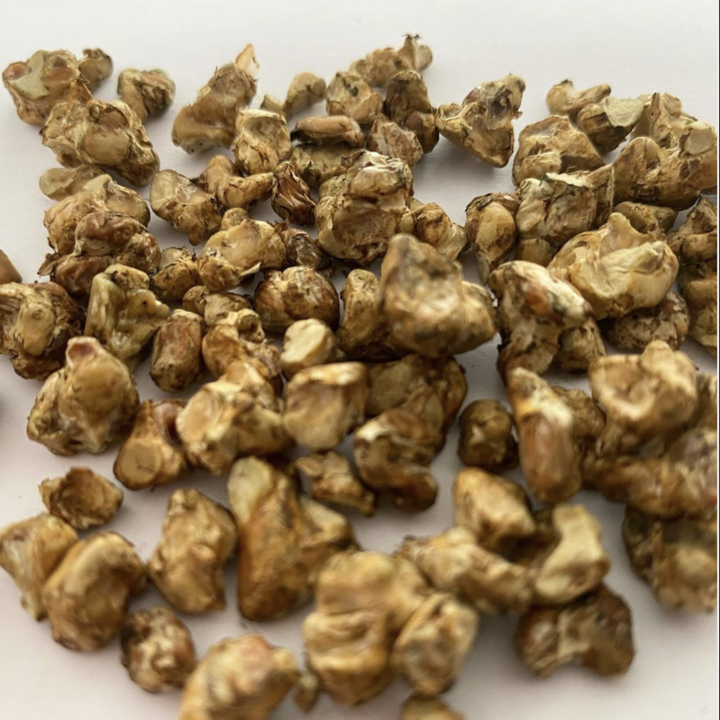
For those interested in starting their own practice, our starter pack includes fresh truffles, a precision scale, and guidance to help you approach microdosing with realistic expectations.
What about observational and survey studies?
Not all research is experimental. Surveys and observational studies ask people about their experiences with psilocybin outside clinical settings. These studies are useful for understanding patterns, motivations, and self-reported outcomes. They can generate hypotheses for controlled trials.
But they can’t prove causation. If a survey finds that people who microdose report better mood, that could mean microdosing improves mood, or that people with better baseline mood are more likely to try microdosing, or that people who feel benefits continue while others quit. Selection bias, recall bias, and lack of objective measurement all weaken causal claims.
When evaluating survey-based research, check the sample recruitment method. Was it an online forum for enthusiasts? That skews toward positive responses. Were participants paid or volunteers? Both introduce different biases. Always weigh these studies as hypothesis-generating, not definitive.
Reading the full paper, not just the abstract
The abstract summarises findings but rarely includes limitations, conflicts of interest, or statistical nuance. The methods section reveals sample characteristics, inclusion criteria, and how outcomes were measured. The discussion often contains the authors’ own caveats: ‘our sample was predominantly white and educated’, ‘follow-up was limited to four weeks’, ‘we lacked an active control.’
Many papers are behind paywalls, but preprint servers like PsyArXiv and bioRxiv host early versions. University libraries, ResearchGate requests, and even emailing authors directly can get you access. Reading beyond the headline is the core of reading psilocybin research critically. It’s also the quickest way to spot when media coverage has overreached.
Our guide on the benefits of microdosing and what the research says offers a grounded overview of current evidence, including what remains uncertain.
How conflicts of interest shape research
Some psilocybin research is funded by companies developing patents, therapies, or clinics. That doesn’t make the research invalid, but it does introduce potential bias. Studies funded by industry are statistically more likely to report positive results than publicly funded research.
Look for the funding and conflict-of-interest statement, usually at the end of the paper. If the lead author is a paid consultant for a psilocybin pharmaceutical company, read the results with that context. Independent replication by teams with no financial stake is the gold standard.
Practical checklist for evaluating a psilocybin study
When you encounter a new piece of psilocybin research, run through this quick checklist:
- Sample size: Is it large enough to draw reliable conclusions, or is this exploratory?
- Control group: Is there one? Is it placebo, active placebo, or standard care?
- Blinding: Did participants and researchers know who got psilocybin?
- Outcome measures: Were they validated, objective, and preregistered?
- Follow-up duration: Were participants tracked for weeks, months, or just days?
- Replication: Is this the first study of its kind or have others found similar results?
- Funding and conflicts: Who paid for the study and do authors have financial interests?
No study will tick every box perfectly. But the more boxes it ticks, the more weight you can give its conclusions.
Why microdosing research is especially tricky
Microdosing studies face unique challenges. Doses are sub-perceptual, so blinding should be easier, but even 0.5 grams of fresh truffles can produce subtle effects some people notice. Expectations run high because of media coverage, which inflates placebo responses. Outcome measures like mood, focus, and creativity are subjective and fluctuate daily.
Several recent randomised controlled trials on microdosing found no significant difference between psilocybin and placebo on most measures. That doesn’t mean microdosing doesn’t work for anyone, it means the average effect across a group may be small or indistinguishable from placebo under controlled conditions. Individual variation is huge. Some respond, others don’t, and we don’t yet know why.
For beginners trying to navigate this uncertainty, our complete microdosing guide provides practical advice grounded in both research and real-world experience.
Frequently asked questions
What is the biggest weakness in most psilocybin studies?
The inability to properly blind participants. Because psilocybin produces noticeable effects, people usually know whether they received the active drug or placebo, which inflates expectation effects and makes it hard to isolate the pharmacological contribution.
Are open-label psilocybin studies worthless?
Not worthless, but limited. Open-label designs (where everyone knows they’re taking psilocybin) are useful for safety data, dosing exploration, and hypothesis generation. They can’t prove efficacy because there’s no control for placebo, expectation, or time.
How large should a psilocybin trial be to trust its results?
For exploratory pilots, 20 to 30 participants is reasonable. For efficacy claims, aim for 50 to 100 per group minimum. Larger samples reduce the chance that results are due to random variation and improve generalisability.
Can I trust psilocybin research funded by pharmaceutical companies?
Industry-funded research isn’t automatically biased, but it should be read alongside independent studies. Look for replication by academic groups with no financial interest. Transparency about conflicts of interest and preregistered protocols also increase trust.
Do meta-analyses solve the problem of small studies?
Meta-analyses pool data from multiple studies to increase power, which is helpful. But if the underlying studies are all small, poorly controlled, or methodologically weak, the meta-analysis inherits those flaws. Quality matters more than quantity.
What is the most reliable evidence we have for psilocybin so far?
The strongest evidence is for treatment-resistant depression, supported by multiple phase 2 trials with control groups and replicated across research centres. Results for end-of-life anxiety in cancer patients are also promising. Microdosing, creativity, and cognitive enhancement have much weaker evidence at present.
Conclusion
Reading psilocybin research critically means looking past the headlines and asking basic questions about study design, sample size, and control. Not every study is designed to prove efficacy; many are exploratory. Understanding the difference helps you navigate the flood of mushroom news with confidence and make informed decisions grounded in evidence rather than hype.