- Written on Modified on
- 6 min. reading time

If you are choosing between reishi before bed and magnesium for sleep, the answer depends on what keeps you awake. Reishi works by calming the nervous system and reducing stress-driven wakefulness over time, while magnesium addresses physical tension, muscle cramps, and neurotransmitter balance for faster results. Both can improve sleep quality, but they operate through different mechanisms and suit different types of insomnia. Some people benefit most from stacking them together.
How reishi before bed supports sleep
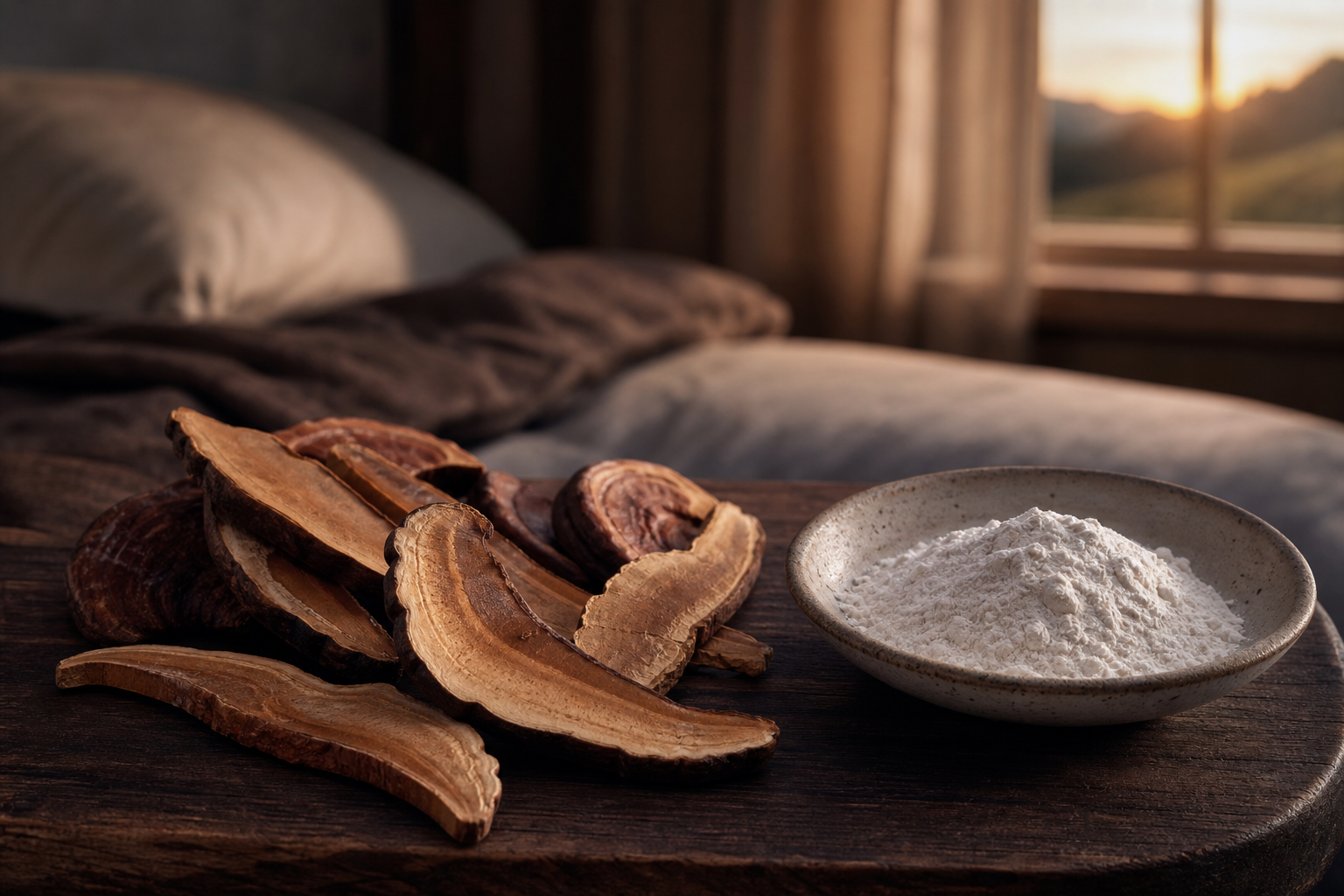
Reishi is a functional mushroom used in traditional medicine for centuries to promote relaxation and longevity. Its active compounds, triterpenes and polysaccharides, modulate the hypothalamic-pituitary-adrenal (HPA) axis, which regulates your stress response. When your HPA axis is overactive due to chronic stress or anxiety, falling asleep becomes difficult even when you are physically tired.
Reishi does not sedate you directly. Instead, it gently lowers cortisol levels and supports GABA receptor activity, the brain’s primary calming neurotransmitter. This makes it particularly effective for stress-related insomnia, where racing thoughts or emotional activation prevent sleep onset. Studies show reishi can improve total sleep time and reduce nighttime awakenings when taken consistently over several weeks.
The effect is cumulative rather than immediate. Most users notice a subtle shift after 7 to 14 days of regular use. If you need same-night results, reishi may disappoint. But for chronic insomniacs with underlying stress or immune dysregulation, it addresses root causes rather than masking symptoms.
How magnesium improves sleep quality
Magnesium is an essential mineral involved in over 300 enzymatic reactions, including those that regulate sleep. It binds to GABA receptors, similar to reishi, but it also relaxes muscles, reduces physical tension, and supports melatonin production. Magnesium deficiency is common, especially in people with high stress, poor diet, or conditions like restless leg syndrome.
Unlike reishi, magnesium often produces noticeable effects within the first few nights. It works especially well for people whose insomnia involves physical symptoms like muscle cramps, tension headaches, or restless legs. Magnesium glycinate and magnesium threonate are the most effective forms for sleep because they cross the blood-brain barrier efficiently and have minimal digestive side effects.
Typical dosing for sleep ranges from 200 to 400 milligrams taken 30 to 60 minutes before bed. Start at the lower end to assess tolerance. Too much magnesium can cause loose stools, so adjust based on your response. For more natural wellness support, explore our full supplement range.
Which sleep issue does each one address best?
The best choice depends on the root cause of your insomnia. Here is a breakdown:
- Reishi before bed suits you if your sleep problems stem from chronic stress, anxiety, immune overactivation, or an overactive mind at night. It is also helpful for people with autoimmune conditions or inflammation that disrupts sleep cycles.
- Magnesium is ideal if you experience physical restlessness, muscle tension, leg cramps, migraines, or poor sleep quality despite falling asleep easily. It also benefits people with magnesium-depleting habits like high caffeine intake or intense exercise.
If you wake frequently during the night without obvious physical discomfort, reishi may be more effective. If you struggle to relax your body or feel physically ‘wired’, magnesium is the better starting point.
Can you stack reishi and magnesium together?
Yes, and many insomniacs find this combination more effective than either supplement alone. Reishi and magnesium work through complementary pathways: reishi calms the stress response and supports deeper sleep cycles, while magnesium relaxes the body and enhances GABA signaling. There are no known negative interactions between them.
A typical stacking protocol involves taking reishi extract (500 to 1,500 milligrams) and magnesium glycinate (200 to 400 milligrams) together 30 to 60 minutes before bed. Start with lower doses of each to assess your individual response. Some people also add L-theanine or ashwagandha to this stack for additional calming effects, though this increases complexity.
One advantage of stacking is that you address both mental and physical barriers to sleep simultaneously. If stress keeps your mind active while tension locks up your muscles, combining these supplements tackles both issues at once. You can find high-quality reishi and magnesium in our wellness shop.
Timing, dosage and what to expect
For reishi before bed, take it consistently every evening rather than sporadically. Effects build over time. Use a dual-extracted powder or tincture for maximum bioavailability, as raw reishi is tough and poorly absorbed. Dosing typically ranges from 500 to 1,500 milligrams of extract standardized to triterpenes and polysaccharides.
Magnesium should be taken 30 to 60 minutes before your target sleep time. Avoid magnesium oxide, which absorbs poorly and often causes digestive upset. Stick with magnesium glycinate, threonate, or citrate. Glycinate is gentlest on the stomach and most calming. Threonate is best for cognitive benefits alongside sleep support.
Expect magnesium to work within 1 to 3 nights for physical relaxation. Reishi may take 7 to 21 days to show clear improvements in sleep quality. Track your sleep using a journal or wearable device to identify patterns. Consistency matters more than high doses.
Who should avoid these supplements?
Reishi is generally safe but may interact with blood thinners, immunosuppressants, or anticoagulants due to its effects on platelet aggregation and immune modulation. People with bleeding disorders or those scheduled for surgery should avoid it. Pregnant or breastfeeding individuals should consult a healthcare provider before use.
Magnesium is safe for most people but can cause diarrhea at high doses. People with kidney disease should not take magnesium supplements without medical supervision, as impaired kidney function prevents proper excretion. Magnesium can also interact with certain antibiotics and medications for osteoporosis, so check with your doctor if you take prescription drugs.
If you experience persistent insomnia despite supplementation, consider underlying sleep disorders like sleep apnea or restless leg syndrome. Natural supplements are tools, not cures for structural sleep problems.
Frequently asked questions
Can I take reishi before bed every night long-term?
Yes, reishi is considered safe for long-term daily use. Traditional use spans centuries without significant adverse effects. Most studies use protocols lasting several months. Some practitioners recommend occasional breaks, but evidence does not strongly support this necessity.
Does magnesium make you drowsy the next day?
No, magnesium should not cause next-day drowsiness when taken at appropriate doses. If you feel groggy, you may be taking too much or using a poorly absorbed form. Reduce your dose or switch to magnesium glycinate.
Which form of reishi is most effective for sleep?
Dual-extracted reishi powder or tinctures are most effective because they capture both water-soluble polysaccharides and alcohol-soluble triterpenes. Raw dried reishi or simple hot water extracts miss key active compounds. Look for products standardized to at least 10 to 20 percent polysaccharides and 2 to 4 percent triterpenes.
How long does it take for reishi before bed to work?
Most people notice subtle improvements in sleep quality and stress response after 7 to 14 days of consistent use. Full effects often develop over 4 to 6 weeks. Reishi is not a fast-acting sedative, it works by gradually balancing stress hormones and immune function.
Can magnesium help with anxiety-related insomnia?
Yes, magnesium supports GABA receptor activity and reduces nervous system excitability, which can ease anxiety symptoms that interfere with sleep. However, if anxiety is the primary issue, combining magnesium with reishi or ashwagandha may provide better results.
Should I take reishi and magnesium together or separately?
You can take them together without concern. Many users combine them 30 to 60 minutes before bed for synergistic effects. There are no known negative interactions. Start with lower doses of each to assess individual tolerance before combining.
Conclusion
Choosing between reishi before bed and magnesium depends on whether your insomnia is driven more by stress and mental activation or physical tension and nutrient deficiency. Magnesium offers faster physical relaxation, while reishi provides deeper nervous system regulation over time. For many chronic insomniacs, stacking both supplements addresses multiple pathways and produces the most reliable results. Explore our full range of functional mushrooms and supplements at GO Microdose to build your personalized sleep support routine.