- Written on
- 6 min. reading time

If you’re watching your first flush develop in your growkit, you’re probably wondering exactly when to harvest. It’s a question that matters more than you might think. Pick too early and you might leave potency on the table. Wait too long and you risk spore deposits that make a mess of your kit and complicate future flushes.
The good news is that mushrooms give you clear visual signals when they’re ready. Once you know what to look for, timing your harvest becomes straightforward. This guide walks you through the key indicators, explains why they matter, and covers the crucial first hours after you’ve picked your mushrooms.
The veil break: your primary harvest signal
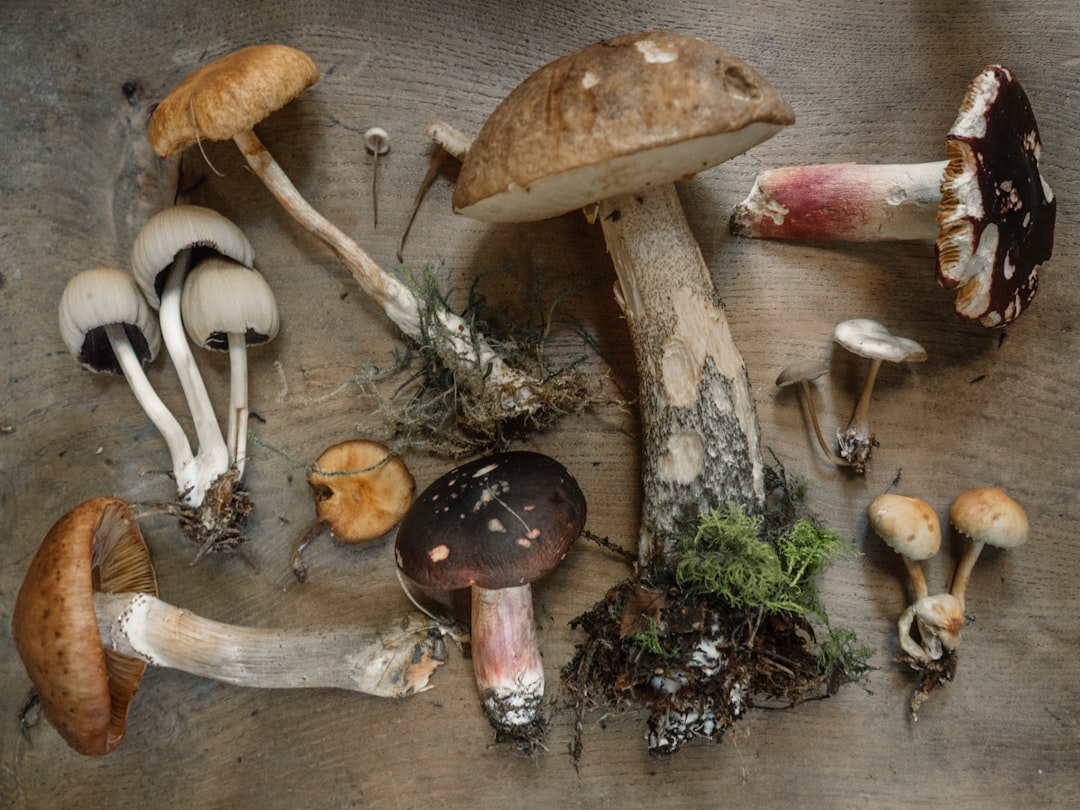
The most reliable indicator is the partial veil, the thin membrane that connects the cap edge to the stem when mushrooms are young. As the mushroom matures and the cap expands, this veil stretches and eventually tears. This moment, called the veil break, is your harvest window.
For Psilocybe cubensis, the most common species in growkits, you want to harvest just as the veil breaks or within a few hours after. At this stage, the cap has fully expanded but hasn’t yet flattened out completely. You’ll see the veil either stretched thin and translucent, or just beginning to tear away from the cap edge.
Why does this matter for potency? The concentration of psilocybin doesn’t increase significantly after the veil breaks. The mushroom continues to grow in size, but mostly by taking on water. This means the total psilocybin content per gram of fresh weight actually decreases slightly as the mushroom gets larger. The veil break represents the point where you get maximum potency per unit of weight.
What happens if you wait too long
Once the veil breaks completely, the cap continues to flatten and the gills underneath begin releasing spores. Within 12 to 24 hours post-veil-break, you may see a dark purple-brown spore deposit forming on the cap itself, on neighboring mushrooms, and across the substrate surface.
Spores aren’t harmful, but they create problems. A heavy spore drop can inhibit the development of your next flush by coating the substrate. It also makes a considerable mess during drying and storage. Some growers report that mushrooms picked after heavy sporulation have a slightly more bitter taste, though this is anecdotal.
From a potency standpoint, waiting an extra day past veil break won’t dramatically reduce psilocybin content, but it will dilute it. A mushroom that’s doubled in weight after veil break might contain only 10 to 20 percent more total psilocybin, meaning the concentration has dropped.
Visual indicators to watch for during growth
Mushrooms in a single flush don’t all mature at the same rate. You’ll likely have some ready to pick while others are still developing. Here’s what to look for as your flush progresses:
Early stage: Small pins with tightly closed caps. The veil is intact and barely visible. These need more time.
Mid-stage: Caps are expanding, the veil is visible and stretched but still fully attached. You’re getting close, but wait another 12 to 24 hours.
Optimal harvest: The veil is tearing or has just torn. The cap is convex or slightly flattened but not fully flat. The gills are visible but not yet releasing visible spores.
Past prime: Cap is completely flat or upturned at the edges. Gills are dark, and you can see purple-brown spore dust. Still usable, but you’ve missed the ideal window.
Don’t feel pressured to harvest everything at once. It’s perfectly fine to pick mature mushrooms individually over a period of a few days. This approach actually reduces the risk of missing the window on faster-developing specimens.
How to harvest without damaging your kit
When you’re ready to pick, technique matters. The goal is to remove the mushroom cleanly without disturbing the mycelium network in the substrate, which you’ll need for subsequent flushes.
Hold the mushroom gently at the base, as close to the substrate as possible. Twist slowly while applying slight upward pressure. The mushroom should release with minimal resistance. Avoid pulling straight up, which can tear away chunks of mycelium.
If you’re harvesting a cluster, it’s often easier to take the whole cluster at once rather than trying to separate individual mushrooms. Clusters share a common base, and trying to remove one can damage the others.
After picking, inspect the substrate. If you see any remaining stem bases, remove them. Leftover tissue can rot and invite contamination. Once you’ve cleared the harvest site, many growers find success using their next growkit for subsequent projects while the current one regenerates for a second flush.
Immediate post-harvest storage
What you do in the first few hours after harvest has a direct impact on quality. Fresh mushrooms contain 90 percent or more water, and they begin degrading quickly at room temperature.
If you plan to consume fresh within 24 hours, store them in a paper bag in the refrigerator. Paper allows moisture to escape and prevents the condensation that leads to sliminess. Don’t use plastic, and don’t seal them in an airtight container.
If you’re drying for storage, start the process as soon as possible. Lay mushrooms on a clean surface with good airflow, spaced so they don’t touch. A fan pointed in their general direction helps. The goal is to get them cracker-dry, which typically takes 24 to 48 hours depending on size and humidity.
Some people use a food dehydrator set to a low temperature, around 35 to 40 degrees Celsius. There’s ongoing debate about whether heat affects psilocybin content. The available evidence suggests that temperatures below 50 degrees Celsius don’t cause significant degradation, but air drying remains the most cautious approach if you have the time.
Once fully dried, store in an airtight container with a silica gel packet in a cool, dark place. Properly dried and stored mushrooms can maintain potency for months or even years.
What about smaller or aborted mushrooms
You may notice some mushrooms in your flush that stop growing while still quite small, sometimes called aborts. These have dark, often blackened caps and won’t develop further.
Don’t discard them. Aborts are often reported to be surprisingly potent per gram of weight, though the total amount you’ll get from each one is obviously small. Some growers specifically seek out aborts for this reason. Harvest them along with your mature mushrooms.
The same harvest and storage principles apply. Handle gently, dry thoroughly, and store properly.
Practical considerations for first-time growers
Your first flush is a learning experience. You might not time everything perfectly, and that’s completely fine. Even mushrooms picked a bit early or late are still perfectly usable.
Keep notes if you’re inclined. Record when you first saw pins, when veils broke, and how long you waited to harvest. This information will help you calibrate your timing for the second and third flushes from the same kit.
If you’re planning to use your harvest for microdosing rather than recreational purposes, precise timing matters somewhat less. The difference in potency between a mushroom picked exactly at veil break versus a few hours later is minimal in the context of a carefully measured microdose. Consistency in your preparation and measurement matters more than hitting a perfect harvest window.
For those planning higher-dose experiences, remember that potency is only one variable. Set, setting, and having a sober person present if you’re new to the experience are equally important considerations.
Most importantly, take your time. Mushrooms from growkits are remarkably forgiving. Even if you miss the textbook-perfect moment, you’ll still end up with a usable harvest. Each flush teaches you more about what to watch for, and your timing will naturally improve with experience.