- Written on Modified on
- 6 min. reading time

You’ve just harvested your first flush from your mushroom growkit, and it was glorious. A thick carpet of mushrooms, heavy fruits, everything you hoped for. Now you’re waiting for the second flush, and something feels off. The pins are sparse. The mushrooms are smaller. The whole thing looks a bit tired.
If this sounds familiar, you’re not alone. Almost every beginner cultivator notices that their second flush produces fewer, smaller mushrooms than the first. It’s not a sign you’ve done something wrong, it’s simply how mushroom cultivation works. But understanding why it happens, and what you can do about it, can help you get much better results from subsequent flushes.
This guide will walk you through the science behind declining yields, and give you practical, proven techniques to rehydrate your substrate and keep your growkit productive for as many flushes as possible.
Why second flushes are naturally smaller
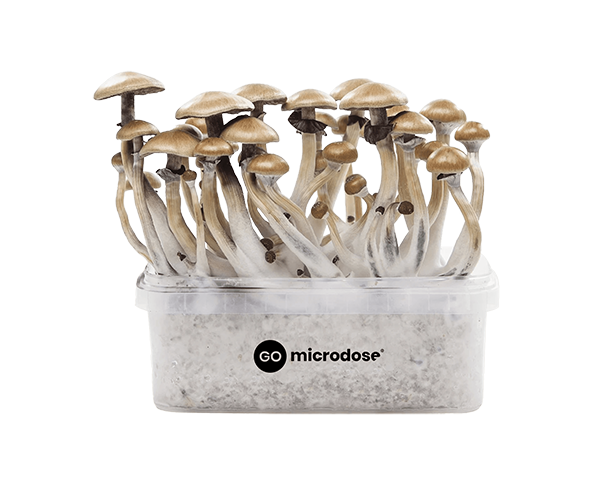
The simple answer is resource depletion. Your substrate (usually a mix of grain, vermiculite, and other nutrients colonised by mycelium) contains a finite amount of water, energy, and nutrients. Each flush draws heavily on these reserves.
Mushrooms are roughly 90% water. When your first flush produces 100 grams of fresh mushrooms, that’s about 90 grams of water pulled directly from the substrate. The mycelium also uses stored sugars and proteins to build fruit bodies. After the first harvest, your substrate is lighter, drier, and nutritionally depleted.
The mycelium itself is still alive and capable of producing more mushrooms, but it needs time to recover and, critically, it needs rehydration. Without adding water back into the system, subsequent flushes will be progressively smaller until the substrate is completely spent.
There’s also a biological reality at play. In nature, the first flush of mushrooms often gets the best conditions: fresh substrate, optimal moisture, minimal competition. Later flushes occur as conditions decline. Your growkit mirrors this pattern. It’s normal, expected, and manageable.
The importance of rehydration between flushes
The single most important step you can take to improve your second flush (and third, and fourth) is to rehydrate the substrate after each harvest. This mimics natural rainfall, which triggers new mushroom growth in the wild.
There are two main approaches: dunking and surface misting. Dunking is more effective for most growkits, especially after the first flush. Surface misting can work for later flushes or smaller cakes, but it’s harder to get deep hydration.
If you’re working with one of our mushroom growkits, the substrate block can be removed from the container and fully submerged. This ensures water penetrates throughout the entire cake, not just the surface layer.
How to dunk your substrate properly
Dunking sounds simple, but there are a few details that make a real difference. Here’s the step-by-step process that works reliably:
1. Harvest cleanly. Remove all mushrooms, including small pins and aborts. Use a sharp knife or twist them off at the base. Don’t leave stumps, they can rot and invite contamination.
2. Prepare clean water. Use tap water that’s been left to stand for a few hours (to off-gas chlorine) or filtered water. Cold water is fine, room temperature is slightly better. Avoid hot water, it can shock or damage the mycelium.
3. Submerge the substrate. Place the substrate block in a clean container (a large bowl, bucket, or the growkit’s own tray) and cover it completely with water. If the block floats, place a clean plate or bowl on top to weigh it down. Make sure it stays fully submerged.
4. Dunk for 12 to 24 hours. This is the sweet spot. Less than 12 hours and the core may not rehydrate fully. More than 24 hours and you risk waterlogging, which can suffocate the mycelium or encourage bacterial growth.
5. Drain thoroughly. After dunking, remove the block and let it drain for 10 to 15 minutes. You want it hydrated, not dripping. Excess surface water can lead to pooling and contamination.
6. Return to fruiting conditions. Place the rehydrated block back in the growkit, mist the sides of the container if needed, and maintain your usual humidity and fresh air exchange routine.
Surface care and humidity management
Even with proper dunking, you still need to maintain surface moisture between pins and during fruit development. The surface of your substrate should look slightly moist, but never pooling or soaking wet.
Mist the inside walls of your growkit container rather than spraying directly onto the substrate. This keeps humidity high without waterlogging the surface. If you do mist the substrate directly, use a fine mist and keep your distance (at least 30 cm).
Good air exchange is just as important as moisture. Mushrooms exhale CO2 as they grow, and high CO2 levels cause long, thin stems and small caps. Fanning your growkit a few times a day, or leaving a small gap for passive air exchange, makes a noticeable difference in mushroom quality.
What to expect from later flushes
Even with perfect technique, your second flush will likely be 50 to 70% the size of your first. The third flush might be 40 to 60% of the first, and so on. This is normal. You’re working with a finite resource.
Most growkits produce three to five flushes total, though the later ones may only yield a handful of mushrooms. Some cultivators stop after the third flush and start fresh with a new kit. Others keep going until the substrate is completely spent or contamination sets in.
Watch for signs that your substrate is done: green or black mould, sour or foul smells, a substrate that feels spongy or breaks apart easily, or flushes that stop coming entirely even after dunking. At that point, it’s time to compost the old block and start fresh.
Other factors that affect flush size
Hydration is the biggest factor, but it’s not the only one. Temperature fluctuations, inconsistent humidity, poor air exchange, and contamination can all reduce your yields.
Keep your growkit in a stable environment. Most Psilocybe cubensis strains fruit best between 20 and 24°C. Cooler temperatures slow growth, warmer temperatures increase contamination risk.
Light also plays a role, though it’s often overstated. Mushrooms don’t photosynthesise, but they do use light as a directional cue. Indirect daylight or a low-wattage LED for 10 to 12 hours a day is plenty. No need for grow lights or special bulbs.
Genetics matter too. Some strains are naturally more vigorous than others, and some substrates are better colonised from the start. If you’re consistently getting weak flushes from multiple kits, it might be worth trying a different supplier or strain.
Final thoughts
A smaller second flush isn’t a failure, it’s biology. But with proper rehydration, careful substrate care, and consistent fruiting conditions, you can keep your growkit productive for multiple rounds and get the most out of every block.
Dunking after each harvest is the single most effective technique. Combine that with good surface moisture, adequate air exchange, and a stable environment, and you’ll see noticeable improvements in both yield and mushroom quality.
Cultivation is part science, part observation. Pay attention to how your substrate responds, adjust your technique as needed, and enjoy the process. Every flush teaches you something new.