- Written on Modified on
- 7 min. reading time

When most people think about immune support, vitamin C and echinacea usually top the list. But there’s a growing body of research pointing to a less obvious connection: the relationship between gut health and immune resilience. This is where chaga mushroom enters the conversation, not as a miracle cure, but as a functional food with specific compounds that appear to interact with our gut microbiome in ways that may benefit immune function.
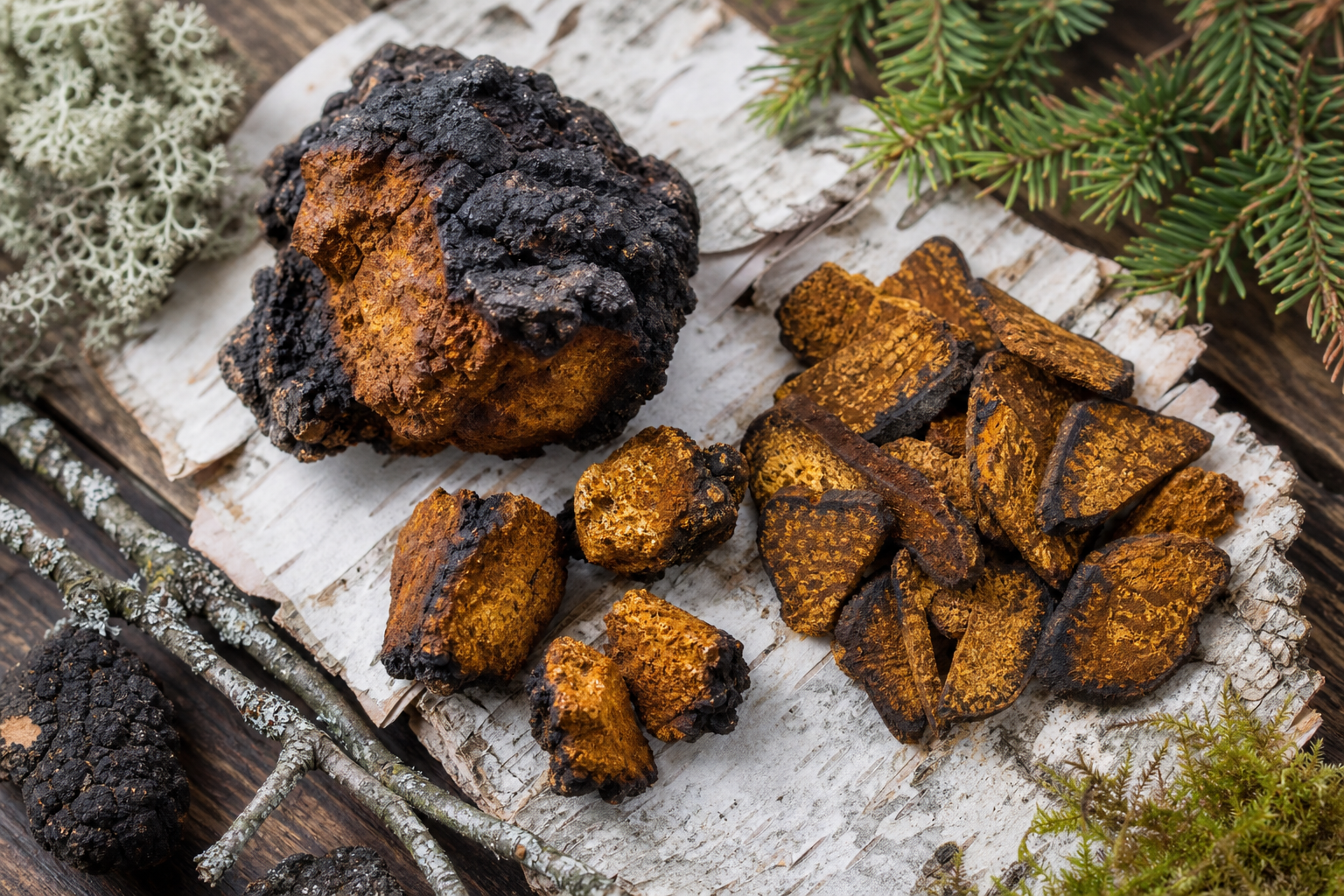
Chaga (Inonotus obliquus) has been used traditionally in Russia and Northern Europe for centuries, harvested from birch trees in cold climates. Modern research has started to identify why this dark, cork-like fungus might deserve attention: it’s particularly rich in beta-glucans and polysaccharides, compounds that interact with immune cells in the gut lining. Let’s look at what we actually know about these mechanisms, and where the science is still catching up to the traditional use.
The gut-immunity connection: more than just digestion
Your gut isn’t just responsible for breaking down food. Roughly 70% of your immune system resides in or around your gastrointestinal tract, particularly in gut-associated lymphoid tissue (GALT). This makes sense from an evolutionary perspective: your digestive system is one of the main interfaces between your body and the outside world, constantly encountering bacteria, viruses, and other potential threats through food and drink.
The gut microbiome, the community of trillions of microorganisms living in your intestines, plays a crucial role in training and modulating your immune response. When this ecosystem is diverse and balanced, it helps your immune system distinguish between harmless substances and actual threats. When it’s disrupted, through stress, antibiotics, or poor diet, immune function can suffer. This is where certain functional compounds, including those found in chaga, may offer support.
Beta-glucans: the immunomodulating polysaccharides
Beta-glucans are a type of polysaccharide (complex sugar molecule) found in the cell walls of fungi, certain bacteria, and some grains like oats. But not all beta-glucans are created equal. The structure matters significantly: beta-1,3/1,6-glucans from mushrooms like chaga have a different molecular arrangement than those from oats, and this structure determines how they interact with immune cells.
Research suggests that these mushroom-derived beta-glucans bind to specific receptors on immune cells, particularly macrophages and natural killer (NK) cells, in the gut lining. This binding doesn’t directly kill pathogens. Instead, it appears to prime or modulate the immune system, potentially helping it respond more effectively when a real threat appears. Think of it as training exercises for immune cells rather than deploying them immediately.
A 2014 review in the journal Biotechnology Advances examined multiple studies on fungal beta-glucans and noted their ability to enhance innate immunity without overstimulating it. This distinction is important: we’re not looking to constantly activate immune responses (which can lead to inflammation and autoimmune issues), but rather to support balanced, appropriate reactions.
Chaga's polysaccharide profile: what makes it distinctive
Chaga contains a particularly high concentration of polysaccharides, with some extracts containing 30-40% by weight. Beyond beta-glucans, chaga also contains other complex carbohydrates that may have prebiotic effects, meaning they feed beneficial gut bacteria. This creates a potential dual mechanism: direct interaction with immune cells through beta-glucans, and indirect support through nurturing a healthier microbiome.
Studies on chaga extracts have shown immunomodulating effects in both cell cultures and animal models. A 2011 study in Food and Chemical Toxicology found that chaga polysaccharides increased the activity of immune cells without causing excessive inflammatory responses. A more recent 2019 study in Frontiers in Pharmacology suggested that chaga polysaccharides might help regulate gut microbiota composition, increasing beneficial bacterial populations.
However, it’s worth noting that most of this research has been conducted in vitro (cell cultures) or in animal models. Human clinical trials are still limited, which means we should be cautious about making definitive claims. The mechanisms look promising, but we’re still in relatively early stages of understanding exactly how these effects translate to everyday human health.
Beyond beta-glucans: antioxidants and melanin
Chaga isn’t just about polysaccharides. It’s also remarkably high in antioxidants, with one of the highest ORAC (Oxygen Radical Absorbance Capacity) scores measured in natural foods. Much of this antioxidant capacity comes from melanin, the same pigment that gives the fungus its distinctive black exterior.
Oxidative stress and chronic inflammation can damage the gut lining and disrupt the microbiome, potentially weakening immune function. Antioxidants help neutralize reactive oxygen species before they cause cellular damage. While the direct link between chaga’s antioxidants and immune support through the gut is still being studied, reducing oxidative damage in intestinal tissue could theoretically support the environment where immune cells and beneficial bacteria interact.
Chaga also contains betulinic acid (derived from the birch trees it grows on), triterpenes, and various phenolic compounds. Some preliminary research suggests these may have anti-inflammatory properties, though again, most evidence comes from laboratory studies rather than human trials.
Practical considerations: how to use chaga
If you’re interested in trying chaga for potential immune support, here are some practical points to consider:
Extraction matters: The beneficial polysaccharides in chaga are locked inside tough cell walls made of chitin, which humans can’t digest. Simply eating powdered chaga won’t give you much benefit. Hot water extraction breaks down these walls and makes the polysaccharides bioavailable. This is why chaga is traditionally consumed as a tea or decoction, simmered for extended periods. Many commercial preparations use dual extraction (hot water plus alcohol) to capture both water-soluble polysaccharides and alcohol-soluble compounds like triterpenes.
Dosage: Studies that have shown immune effects typically use extracts standardized to polysaccharide content, often in the range of 1-3 grams daily. If you’re using raw chaga chunks for tea, a common approach is to simmer 2-3 chunks (about 10-15 grams) in water for several hours, making a concentrate that can be diluted and consumed over a few days.
Consistency: The immune-modulating effects of beta-glucans appear to build over time rather than working immediately. If you’re experimenting with chaga, give it at least several weeks of consistent use before evaluating whether it’s making a difference for you.
our selection of chaga products includes properly extracted options that ensure you’re getting the beneficial compounds in bioavailable form.
What chaga won't do: managing expectations
Let’s be clear about what the evidence doesn’t support. Chaga is not a replacement for medical treatment if you have an immune disorder or chronic infection. It won’t prevent you from catching colds with certainty, and it’s not a cancer cure despite some sensationalized claims online (though there is early-stage research into potential anti-tumor properties that warrants further study).
The concept of “boosting” immunity is itself somewhat misleading. What you actually want is balanced, well-regulated immune function, not an overactive immune system (which can lead to allergies, autoimmune conditions, and chronic inflammation). Based on current research, chaga may be better understood as supporting immune resilience, helping your system maintain appropriate responses rather than simply cranking everything up.
There are also some cautions to consider. Chaga may have blood-thinning properties and could interact with anticoagulant medications. It’s also theoretically possible that immune-modulating substances could be problematic for people with autoimmune conditions, though the evidence here is unclear. If you have any existing health conditions or take medications, it’s worth discussing chaga with a healthcare provider before adding it to your routine.
The bigger picture: functional mushrooms and holistic immunity
Chaga isn’t the only functional mushroom with potential immune-supporting properties. Reishi, turkey tail, and cordyceps all contain their own profiles of beta-glucans and polysaccharides, each with slightly different structures and potential effects. Some people find value in rotating between different mushroom species or using combinations, though there’s limited research on whether this approach is more effective than focusing on a single type.
It’s also worth remembering that no single supplement operates in isolation. Your gut-immunity axis is influenced by many factors: diet quality, sleep patterns, stress levels, exercise, antibiotic use, and more. Functional mushrooms like chaga might offer specific support through their unique compounds, but they work best as part of a broader approach to health rather than as a magic bullet.
The research on the gut-immunity connection is one of the more exciting areas in nutritional science right now, and functional mushrooms sit at an interesting intersection: they’re traditional foods with centuries of use, now being examined through the lens of modern immunology and microbiology. We’re learning that the polysaccharides in chaga and similar fungi interact with our bodies in sophisticated ways, potentially supporting the complex ecosystem of microbes and immune cells in our digestive system.
If you’re already exploring functional mushrooms for other purposes like focus or energy, you might also be interested in other varieties we carry, each with their own potential benefits. While chaga stands out for immune-related research, lion’s mane is more studied for cognitive support, and cordyceps for energy and endurance, showing how diverse this category of fungi really is.
The evidence for chaga’s immune-supporting properties through gut health mechanisms is promising but still developing. The beta-glucans and polysaccharides it contains have demonstrated immunomodulating effects in laboratory and animal studies, with plausible mechanisms involving both direct interaction with immune cells and indirect support through the microbiome. For wellness-oriented consumers looking beyond basic vitamin C for immune resilience, chaga represents an evidence-based option worth considering, provided expectations remain realistic and it’s used as part of a comprehensive approach to health.