- Written on Modified on
- 6 min. reading time

Many people exploring natural support for persistent ear ringing are asking whether lion’s mane for tinnitus might offer relief. While research is still emerging, this medicinal mushroom’s nerve regeneration properties have caught attention in the tinnitus community. Early studies suggest lion’s mane may support auditory nerve health, though it’s not a proven cure. Here’s what users report and what the science currently shows.
What is lion's mane and why consider it for tinnitus?
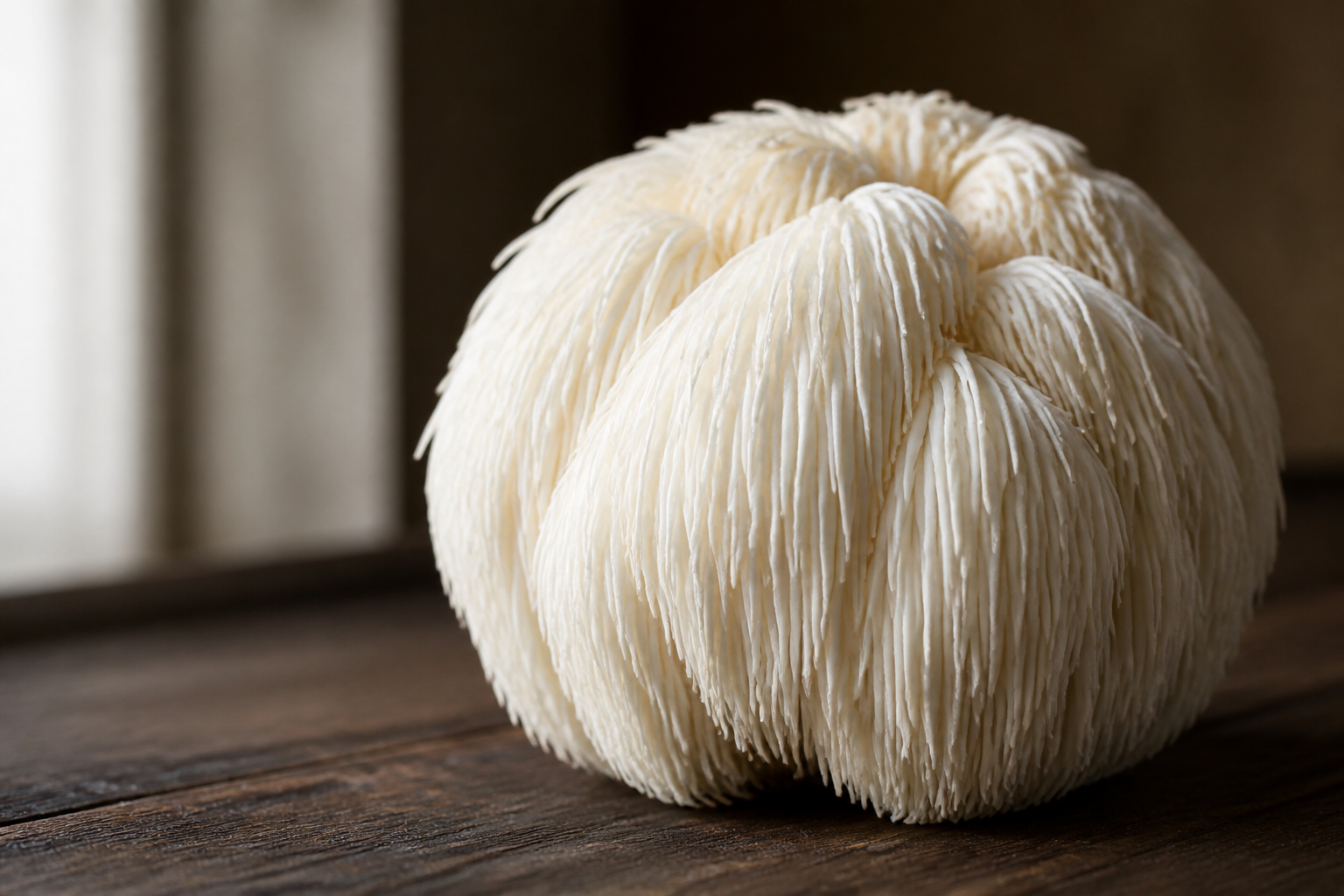
Lion’s mane (Hericium erinaceus) is a white, shaggy mushroom used in traditional Chinese medicine for centuries. Modern research has focused on its compounds called hericenones and erinacines, which appear to stimulate nerve growth factor (NGF) production in the brain and nervous system.
Tinnitus, the perception of ringing or buzzing in the ears without external sound, often involves auditory nerve dysfunction or damage. Since lion’s mane shows potential for nerve regeneration and neuroprotection, some researchers and users theorize it might support auditory pathway health. The connection isn’t direct, but the mechanism offers biological plausibility worth exploring.
What does early research say about lion's mane for tinnitus?
Direct studies on lion’s mane for tinnitus specifically are limited. However, related research provides context:
- Nerve regeneration studies: Animal research shows lion’s mane extracts can promote peripheral nerve regeneration and myelin repair, which could theoretically benefit damaged auditory nerves
- Neuroprotective effects: A 2014 study found hericenones protected neurons from oxidative stress, a factor implicated in some forms of tinnitus
- Inflammation reduction: Lion’s mane demonstrates anti-inflammatory properties in multiple studies, and inflammation in the auditory system can contribute to tinnitus perception
These mechanisms suggest potential pathways for benefit, but no clinical trials have yet confirmed effectiveness for ear ringing specifically. The research is promising but preliminary.
What do tinnitus sufferers report about lion's mane?
Anecdotal reports from online tinnitus communities paint a mixed picture. Some users describe modest improvements in volume or perception after several weeks of consistent use, typically at doses between 1,000 and 3,000 mg daily of quality extract.
Common themes in user reports include:
- Effects taking 4-8 weeks to become noticeable, if at all
- Greater impact on tinnitus triggered by stress or inflammation rather than physical damage
- Improvement in ability to cope with the sound rather than elimination
- Better results when combined with other interventions like sound therapy or stress management
It’s crucial to note that anecdotal evidence doesn’t replace clinical research, and placebo effects are particularly strong in tinnitus interventions. Individual results vary widely, and many users report no change at all.
How would you use lion's mane for tinnitus support?
If you’re considering trying lion’s mane for ear ringing, here’s a practical approach based on available evidence and user experience:
- Dosage: 500-3,000 mg daily of standardized extract, typically split into two doses. Start lower and increase gradually
- Form: Dual-extract supplements (both water and alcohol extraction) contain the full spectrum of active compounds including both hericenones and erinacines
- Timeline: Commit to at least 8-12 weeks before evaluating results, as nerve-related effects develop slowly
- Consistency: Daily use appears more effective than sporadic supplementation
You can explore quality lion’s mane supplements formulated for cognitive and nervous system support. Look for products that specify extraction methods and active compound concentrations.
Can you combine lion's mane with other tinnitus approaches?
Lion’s mane is generally well-tolerated and can be integrated into broader tinnitus management strategies. Many users combine it with:
- Magnesium supplementation: May support nerve function and reduce stress-related tinnitus
- Sound therapy or masking: Lion’s mane doesn’t interfere with acoustic interventions
- Stress reduction practices: Since stress can amplify tinnitus perception and lion’s mane may support stress resilience
- Other medicinal mushrooms: Reishi for its anti-inflammatory effects or cordyceps for circulation support
Always inform your healthcare provider about supplements you’re taking, especially if you’re on blood thinners or other medications, as lion’s mane can have mild anticoagulant effects.
What are realistic expectations for lion's mane and ear ringing?
Setting appropriate expectations is essential when exploring lion’s mane for tinnitus. This mushroom is not a cure, and dramatic improvements are unlikely based on current evidence.
More realistic outcomes might include subtle reduction in perceived volume, improved ability to habituate to the sound, or better overall nervous system resilience. For some people, particularly those whose tinnitus stems from nerve inflammation or stress rather than structural damage, effects may be more noticeable.
The most honest assessment is that lion’s mane represents a low-risk, potentially supportive option worth considering as part of a broader approach. It shouldn’t replace medical evaluation or proven interventions, but may complement them for those interested in natural support options.
Browse our range of functional mushroom supplements to explore quality options for nervous system and cognitive support.
Frequently asked questions
How long does it take for lion’s mane to work for tinnitus?
If lion’s mane provides any benefit for ear ringing, effects typically emerge after 4-8 weeks of consistent daily use. Nerve regeneration and neuroprotective processes develop slowly, so patience is essential. Some users report noticing changes around the 6-week mark, while others see no improvement even after 12 weeks.
What’s the best dosage of lion’s mane for tinnitus relief?
Most user reports suggest 1,000-3,000 mg daily of quality dual-extract lion’s mane, split into morning and evening doses. Start with 500-1,000 mg and increase gradually. Higher doses aren’t necessarily better, and consistent moderate dosing appears more effective than sporadic high doses.
Can lion’s mane make tinnitus worse?
There are isolated reports of temporary tinnitus worsening when starting lion’s mane, though this is uncommon. If you notice increased ringing, reduce the dose or discontinue use. Some people may be sensitive to histamine-related effects from mushrooms, which could theoretically affect ear symptoms.
Should I choose lion’s mane powder or extract for tinnitus?
Dual-extract supplements (containing both water-soluble beta-glucans and alcohol-soluble hericenones/erinacines) provide the full spectrum of active compounds. These are generally more potent and reliable than simple powdered mushroom, which has lower bioavailability of key nerve-supporting compounds.
Can I combine lion’s mane with other supplements for tinnitus?
Yes, lion’s mane combines well with magnesium, zinc, ginkgo biloba, and other supplements commonly used for ear health. However, if you’re taking blood thinners or immune-suppressing medications, consult your healthcare provider first, as lion’s mane has mild anticoagulant and immune-modulating properties.
Is there a difference between fresh and extracted lion’s mane for tinnitus?
For therapeutic purposes, standardized extracts are preferable to fresh or simply dried mushroom. The extraction process concentrates active compounds like hericenones and erinacines that drive nerve-supporting effects. Fresh lion’s mane is excellent as food but provides much lower concentrations of these specific compounds.
Conclusion
While direct evidence for lion’s mane for tinnitus remains limited, its nerve regeneration properties and anecdotal reports make it a reasonable natural option to explore. Set realistic expectations, commit to consistent use for at least 8-12 weeks, and consider it part of a broader tinnitus management approach rather than a standalone solution.