- Written on
- 6 min. reading time
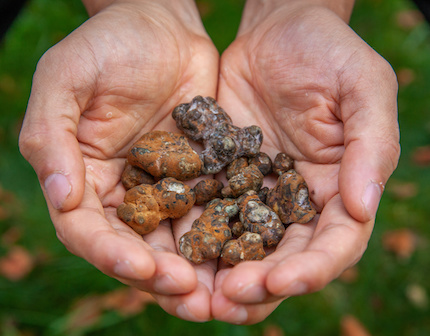
Microdosing before a job interview is a question more professionals are quietly asking themselves. A sub-perceptual dose of fresh psilocybin truffles, typically around 0.5 grams, can promote calm focus in daily settings, but an interview is a high-stakes performance under scrutiny. While some report steadier nerves and sharper presence, others risk mistiming, unexpected sensitivity, or subtle cognitive shifts that undermine rather than enhance performance. The honest answer: it’s not a reliable performance tool for most people in this context.
What happens when you microdose before an interview?

A standard microdose of fresh truffles is around 0.5 grams, though some individuals respond to as little as 0.3 grams or prefer up to 0.7 grams. Effects typically begin 30 to 60 minutes after ingestion and last four to six hours. At this dose, you shouldn’t experience visual distortions or overt psychedelic effects, but you may notice subtle shifts in mood, perception, and cognitive processing.
In relaxed, familiar environments, these shifts often translate to improved flow, curiosity, and emotional openness. But job interviews are neither relaxed nor familiar. You’re managing anxiety, reading social cues, formulating answers under pressure, and projecting confidence to strangers. A microdose introduces variables you can’t fully predict or control in that moment.
Why some people consider it
The appeal is understandable. Many microdosers report reduced social anxiety, improved verbal fluency, and a sense of calm presence, qualities that could theoretically help in an interview setting. If you’ve been following a consistent microdosing protocol and know your sweet spot, you might feel tempted to lean on that edge when the stakes are high.
Some also hope a microdose will dampen the physiological stress response: the racing heart, dry mouth, and mental fog that sabotage clear communication. There’s emerging evidence that psilocybin can modulate serotonin pathways involved in stress and mood regulation, which might explain why some people feel more grounded on dose days.
The risks of microdosing for a job interview
Timing is the first major pitfall. If your interview is at 10 a.m. and you dose at 9 a.m., you may still be in the come-up phase during the conversation, which can feel distracting or uncomfortable. If you dose too early, effects may have worn off or left you in a post-dose dip. There’s no universal sweet spot, and nerves can alter your perception of time and onset.
Individual variability is the second risk. Even experienced microdosers report that the same dose can feel different depending on sleep, food, stress, and context. A dose that feels smooth on a quiet work-from-home day might feel overstimulating or foggy in a high-pressure, unfamiliar environment. You can’t rehearse for that.
Then there’s the cognitive trade-off. Microdosing can enhance creativity and associative thinking, but interviews often reward structured, concise answers. Some users report mild word-finding difficulties or tangential thinking on dose days, exactly what you don’t want when trying to stay on script and impress a hiring panel.
Finally, there’s the psychological burden. If you’re anxious about whether the dose will help or hinder, that meta-worry becomes another layer of stress. You need full confidence in your baseline capability, not reliance on a substance with unpredictable timing.
When it might make sense
There are limited scenarios where microdosing before an interview could be defensible. If you’ve been following a consistent protocol for months, know your exact dose and timing, and have tested it in similarly high-pressure social situations, public speaking, difficult conversations, client pitches, you might have enough data to make an informed decision.
It’s also worth distinguishing between interview types. A relaxed, exploratory conversation with a startup founder over coffee is different from a formal panel interview at a corporate firm. The former allows more room for authenticity and adaptability; the latter demands precision and control.
If you do choose to dose, dose at least 90 minutes before the interview to avoid the come-up phase, eat a light meal beforehand to stabilize absorption, and have a clear exit plan if you start to feel off. But honestly, for most people, the risk-reward ratio doesn’t favour it.
Smarter alternatives for interview nerves
If your goal is to calm nerves and sharpen focus, there are more predictable tools. Ashwagandha KSM-66 is an adaptogen with solid evidence for reducing cortisol and subjective stress, especially when taken consistently in the days leading up to a high-pressure event. Magnesium bisglycinate supports calm and sleep quality, both of which matter more than any substance you take the morning of.
Lion’s mane is another option worth considering in the weeks before an interview, as it supports cognitive clarity and neuroplasticity over time, not as an acute performance enhancer. Pair these with good preparation, mock interviews, and breathwork or brief meditation before you walk in.
Microdosing shines in contexts where you have time, space, and low stakes to explore and integrate insights. Job interviews are the opposite: compressed, high-stakes, and unforgiving of missteps.
What to do if you're already microdosing regularly
If you’re already following a microdosing schedule and an interview happens to fall on a dose day, you have a choice. You can skip that dose and return to your rhythm afterward, or you can proceed as normal if your protocol is stable and familiar. The key is not to introduce a dose specifically for the interview if you haven’t tested that context before.
If you’re using the Fadiman protocol, one day on, two days off, or the Stamets stack, five days on, two days off, it’s often easy to shift your schedule by a day or two without disrupting the overall pattern. Flexibility matters more than rigid adherence, especially when the stakes involve your career.
For those new to microdosing and curious about starting, our starter pack includes fresh psilocybin truffles, a precision scale, and a guide to help you find your baseline in low-pressure settings first.
Frequently asked questions
Can microdosing help with interview anxiety?
It may reduce background anxiety for some people when used consistently over time, but it’s not a reliable acute anti-anxiety tool for high-pressure moments. Timing, variability, and context make it too unpredictable for most interview settings.
What dose of fresh truffles would someone take before an interview?
A typical microdose is around 0.5 grams of fresh psilocybin truffles, though individual responses vary from 0.3 to 0.7 grams. We sell fresh truffles, not dried, so these doses are higher than the 0.1 to 0.3 grams you’d use with dried material.
How long before an interview should you microdose?
If you choose to dose, aim for 90 to 120 minutes before the interview to avoid the come-up phase and ensure you’re in the stable window of effects. Dosing too close to start time increases the risk of distraction or discomfort.
What are safer alternatives to microdosing for interview stress?
Ashwagandha KSM-66, magnesium bisglycinate, quality sleep, and thorough preparation are all more predictable. Breathwork and brief mindfulness exercises right before the interview can also steady your nervous system without introducing cognitive variables.
Is it legal to microdose before a job interview?
Psilocybin truffles are legal in the Netherlands but controlled in the UK and most of Europe. Using them before an interview doesn’t create additional legal risk beyond possession and use, but it’s worth considering workplace drug policies if relevant to your industry.
Should experienced microdosers skip their dose on interview days?
It depends on your experience and confidence. If your protocol is stable and you’ve tested similar social situations, proceeding as normal may be fine. If there’s any doubt, skipping one dose and resuming afterward is the safer choice.
Final thoughts
Microdosing before a job interview might sound like a subtle edge, but for most people it introduces more risk than reward. Interviews demand clarity, consistency, and confidence, all of which are better served by preparation, sleep, and evidence-backed supplements than by a substance with unpredictable timing and individual variability. If you’re curious about microdosing for focus, creativity, or resilience in everyday life, start in low-stakes contexts and build your understanding over time.