- Written on Modified on
- 8 min. reading time

Microdosing for marathon training is gaining attention among amateur endurance athletes exploring flow states and enhanced recovery. Fresh psilocybin truffles in small doses (around 0.5 grams) may help some runners access deeper focus during long training runs and potentially support mental resilience through the demanding 12-16 week build-up. While research is still emerging, anecdotal reports from recreational runners suggest benefits in mind-body connection, reduced training anxiety, and improved post-run reflection. This isn’t about performance enhancement in the traditional sense, but rather exploring a different relationship with effort, discomfort, and endurance.
What draws endurance athletes to microdosing?

Marathon training demands consistency over months. You’re logging 40-60 kilometers weekly, managing fatigue, battling mental resistance on cold mornings, and navigating the psychological challenge of progressively longer runs. Some athletes turn to microdosing not for a competitive edge, but for a shift in how they experience the training process itself.
Runners report that microdosing helps them stay present during challenging workouts rather than fixating on pace or distance. The inner critic that whispers ‘you can’t do this’ during kilometer 25 seems to quiet down. Others describe improved body awareness, noticing fatigue signals earlier and adjusting effort accordingly. There’s also interest in recovery benefits, particularly the mental reset between hard training blocks.
It’s worth noting that psilocybin isn’t a magic endurance formula. You still need proper training structure, adequate sleep, and solid nutrition. What microdosing may offer is a different quality of attention during the thousands of footsteps between the start line and race day.
How does microdosing interact with endurance training?
Psilocybin influences serotonin receptors, particularly 5-HT2A, which play roles in mood regulation, perception, and cognitive flexibility. At microdose levels (typically 0.5 grams of fresh truffles), most people don’t experience visual effects or significant alterations in consciousness. Instead, effects are subtle: slightly enhanced colour perception, improved mood baseline, or increased mental fluidity.
For endurance athletes, the interest centres on several potential mechanisms:
- Flow state access: Psilocybin may reduce default mode network activity, the brain system associated with self-referential thinking and rumination, potentially making it easier to enter the absorbed, effortless state runners associate with their best training sessions
- Pain perception: Some users report a different relationship with discomfort, not numbness but rather reduced emotional reactivity to physical sensations
- Neuroplasticity: Psilocybin promotes neural pathway formation, which theoretically could support the motor learning and adaptation that occurs during training
- Recovery mindset: The mood-lifting and perspective-shifting effects may help athletes maintain motivation through rest days and lighter weeks
These mechanisms remain speculative for athletic performance specifically. Most psilocybin research focuses on mental health applications, not sports science.
When should you microdose during a training cycle?
Timing matters. Most endurance athletes following a microdosing protocol use the Fadiman method (one day on, two days off) or the Stamets stack (four days on, three days off). This prevents tolerance build-up and maintains sensitivity. For marathon training integration, consider these approaches:
- Long run days: Some runners microdose on the morning of their weekly long run, aiming to enhance the meditative quality of 90-150 minute efforts
- Recovery runs: Easy-pace recovery days can be good opportunities to explore the body awareness aspects without performance pressure
- Rest days: Microdosing on complete rest days allows focus on reflection, training journal work, and mental recovery
- Avoid intensity days: Track sessions, tempo runs, and hard interval workouts require precise physical coordination and pacing judgment, not ideal times to experiment
Never microdose for the first time on race day or before a key workout. Build familiarity during lower-stakes training runs. Our complete microdosing guide covers protocol options in detail, which you can adapt to your training schedule.
What's the right dose for active training days?
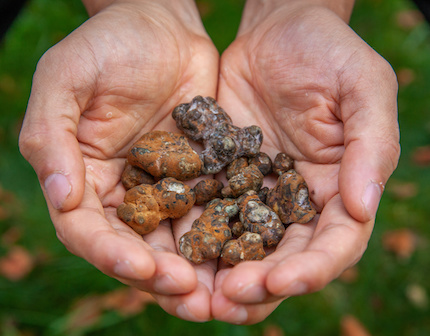
For microdosing for marathon training, most athletes stay in the standard microdose range: 0.3 to 0.7 grams of fresh psilocybin truffles, with 0.5 grams being typical. This is the equivalent of roughly 0.15 to 0.2 grams dried, though we sell fresh truffles which maintain potency and are easier to dose accurately.
Start conservative, especially before running. The goal is sub-perceptual or barely perceptual effects. You should feel capable of all normal activities including exercise. If you notice visual distortions, time dilation, or difficulty focusing on practical tasks, the dose is too high for a training day.
Some runners find that the physical exertion of a long run slightly amplifies effects, so what feels appropriate at rest might feel more pronounced at kilometer 15. Test your dose on a short easy run first. Use our dosage calculator to help establish your starting point, then adjust based on individual response.
Timing of ingestion matters too. Fresh truffles take 30-60 minutes to begin working, with peak effects around 90-120 minutes. If dosing before a long run, take them 45-60 minutes before starting so effects align with the middle portion of your run when mental fatigue typically sets in.
What do runners actually report?
Anecdotal experiences vary widely, which is typical of psilocybin’s highly individual effects. Common themes from endurance athletes include enhanced appreciation of surroundings during trail runs, reduced clock-watching and pace anxiety, and improved ability to stay with discomfort rather than tensing against it. Several runners describe breakthrough long runs where everything ‘clicked’ in an effortless way.
Others report minimal effects on running itself but value the general well-being and motivation support during heavy training blocks. A few find that microdosing increases interoceptive awareness to the point of distraction, too much focus on heartbeat or breathing rhythm.
The recovery angle is particularly interesting. Some athletes use microdosing specifically during taper periods (the 2-3 week reduction in volume before race day) to manage the restlessness and anxiety that often emerge when training load drops. The perspective-shifting quality can help maintain confidence and positive visualization.
It’s important to maintain realistic expectations. Microdosing won’t compensate for inadequate training, poor sleep, or nutritional gaps. It’s an optional tool for exploring the mental side of endurance, not a performance supplement in the conventional sense.
Safety considerations for active athletes
Psilocybin is physiologically safe with low toxicity and no addiction potential, but there are specific considerations for athletes:
- Cardiovascular: Psilocybin can cause mild increases in heart rate and blood pressure. While not concerning at rest for healthy individuals, consider this if you have underlying heart conditions. Endurance training already stresses the cardiovascular system.
- Hydration and thermoregulation: Stay attentive to hydration. Some users report altered thirst perception or body temperature awareness.
- Judgment and coordination: Even at microdose levels, reaction time or spatial judgment might be subtly affected. Stick to familiar routes, avoid technical trail sections, and never microdose before road running in heavy traffic.
- Mental health: If you have history of psychosis, bipolar disorder, or severe anxiety, consult a knowledgeable healthcare provider before combining psilocybin with intense physical stress.
Always prioritize training consistency and injury prevention over experimentation. If a microdose day doesn’t feel right, skip the run or adjust to easy effort. Your training plan matters more than any single session.
Legal and practical realities
Psilocybin truffles exist in a legal grey area across Europe. In the Netherlands, fresh truffles are legal to purchase and possess, which is why GO Microdose operates legally. In the UK and most other European countries, psilocybin is controlled, though enforcement around personal microdosing is typically low-priority. Understanding your local laws is your responsibility.
For competitive athletes, note that psilocybin is not on WADA’s prohibited substance list. It’s not tested for in standard anti-doping protocols. However, organizational rules vary, and you should verify if you compete at higher levels.
Practically, fresh truffles need refrigeration (unopened they last 2-3 months, opened use within 3-5 days or dry them). This requires planning for training camps or destination races. Many athletes prepare their training cycle supply in advance using our starter packs, which include everything needed to begin safely.
Frequently asked questions
Can microdosing improve my marathon time?
There’s no evidence that microdosing directly improves race performance or physiological markers like VO2 max or lactate threshold. The potential benefits are psychological: improved training consistency, better mental resilience, enhanced mind-body awareness. These might indirectly support performance by helping you train more effectively, but don’t expect microdosing to replace quality training.
Should I microdose on race day?
Most experienced microdosers advise against dosing on race day unless you’ve tested the exact protocol multiple times during long training runs. Race day involves enough variables (adrenaline, crowds, nerves, nutrition timing) without adding another unknown. The mental benefits of microdosing are better utilized during the training process itself.
How long before a run should I take my microdose?
Fresh psilocybin truffles typically begin working within 30-60 minutes, with peak effects around 90-120 minutes. For a long training run, taking your microdose 45-60 minutes before starting allows effects to align with the middle and later portions of your run. For shorter runs or rest days, timing is less critical.
Will microdosing help with recovery between hard workouts?
Microdosing won’t replace sleep, nutrition, or proper recovery protocols, but some athletes find it helps with the psychological aspects of recovery: managing restlessness on rest days, maintaining positive mindset during taper, and processing the mental fatigue of high-volume training. The mood and perspective benefits may support overall training consistency.
What if I feel too much effect during my run?
If you feel uncomfortably altered during a training run, slow down to an easy walk, stay hydrated, and return home if needed. You’re not in danger, but prioritizing safety over completing the workout is important. This suggests your dose was too high for activity. Reduce by 0.1-0.2 grams next time and retest on a shorter, easier run.
Can I combine microdosing with other supplements like caffeine or BCAAs?
Most endurance athletes safely combine microdosing with their normal supplement routine including caffeine, electrolytes, protein, and recovery aids. No known dangerous interactions exist with common sports nutrition products. However, be aware that stimulants like caffeine might slightly amplify the energetic quality of a microdose. Start conservative and assess individual response.
Final thoughts
Microdosing for marathon training represents a personal exploration of the mental side of endurance rather than a performance hack. If you’re curious about deepening your relationship with long training runs, accessing flow states more consistently, or managing the psychological demands of a 16-week build-up, microdosing with fresh psilocybin truffles may offer interesting territory to explore. Start conservatively, maintain your training fundamentals, and approach it as one element in a broader endurance practice. Your best marathon comes from consistent smart training, adequate recovery, and mental resilience, with or without microdosing.